

Easy Money Trailer Rodney Dangerfield
| Cinema Retro Celebrating Films of the 1960s & 1970s REVIEW: "THE COMEDY OF TERRORS" (1963) STARRING VINCENT PRICE, PETER LORRE, BASIL RATHBONE AND BORIS KARLOFF; KINO LORBER BLU-RAY SPECIAL EDITION BY HANK REINEKE On the very month that Roger Corman's The Raven was to hit theaters in January 1963, AIP announced that they had just signed a four year eight-film contract with that film's co-star Peter Lorre. The contract was an interesting one as it wasn't exclusive: the actor wasn't necessarily barred from accepting acting offers from other studios. But the contract stipulated Lorre could not accept any roles offered of "the horror, science-fiction, macabre type," and certainly not in any competing non-AIP Edgar Allan Poe film adaptation. Such movies would remain the domain of AIP, which had recently been on a hot streak with their churning of Gothic horrors. Arkoff and Nicholson triumphantly announced they had already readied two new projects for Lorre, one titled It's Alive (reported to co-star Elsa (The Bride of Frankenstein) Lanchester and a second, The Comedy of Terrors. The former film, alas, would never see the light of day. Then, in March of '64, AIP announced a similar deal had been struck with the aging and increasingly frail Boris Karloff. Perhaps sensing that the seventy-six year old Karloff's faltering health might prove a liability, the actor's contract called for a more cautious four film, two-year deal. As with Lorre, the rider in Karloff's contract also precluded him from appearing in any non-AIP horror-type pictures in the years 1963-1965. In the final tally, Karloff was able to fulfill to the terms of the deal struck, appearing in two films, The Comedy of Terrors and The Terror in 1963. His concluding two films for AIP were less demanding on the beloved actor. He would appear in a cameo role in the Annette Funicello and Frankie Avalon romp Bikini Beach (1964) and, lastly, as "The Corpse" – a somewhat more substantial seated role for the mostly wheelchair-bound actor - in the Nancy Sinatra vehicle Ghost in the Invisible Bikini (released 1966). Lorre's tenure with AIP was, sadly, cut short. The actor appeared, memorably, in The Comedy of Terrors and, in a brief cameo, in still another Frankie and Annette teen-comedy Muscle Beach Party (1964). These two films would be among his last released. Lorre was found dead, the apparent victim of a stroke, in his apartment on Hollywood Boulevard in March of 1964. He was a mere 59 years of age. Vincent Price, his co-star in both The Raven and The Comedy of Terrors, told the Los Angeles Times that he was "crushed" when he learned of his friend's passing. "Peter was the most inventive actor I've ever known," Price memorialized. "He was a great scholar, an accomplished dramatic actor and a masterful comedian. Peter liked to make pictures which entertained people, not critics. He didn't have any pretensions about conveying messages to the world." AIP was doing very well, thank you, not making edgy soapbox pictures. So well, in fact, that in October of 1963, Nicholson and Arkoff announced that 1964 was going to be their biggest year ever. The two were feeling, justifiably, cocky. Two months earlier the national Theater Owners Association named the pair "Producers of the Year." AIP was riding high and the company's future plans were being readied to be put into aggressive motion. The producers planned for no fewer than twenty-three films to be put into production - with the caveat that only nine would actually be filmed in costly Hollywood. Their promised investment of twenty-five millions dollars into these twenty odd projects would mark a twenty-five percent increase in their budget expenditures of the previous year. "In the field of Edgar Allan Poe, the teen-age appeal 'beach' pictures and in comedy-terror, AIP will continue to be the leaders with even bigger and better productions," the partners promised via a crowing press release. Though they had definite designs on AIP's future, they also thought it time to look back on what had been issued since their incorporation in 1955. To stoke interest in two new Poe adaptations scheduled for release in '64 (The Masque of the Red Death and City in the Sea), the company also planned to reissue twin-bills of earlier efforts, pairing House of Usher with The Pit and the Pendulum and The Premature Burial with Tales of Terror. One of the films that AIP had hoped would carry the day was The Comedy of Terrors, the title a jokey if macabre homage to the famous Shakespeare play. The title was the idea of screenwriter Richard Matheson. Nicholson wanted to title the film Graveside Story, a lampoon of the recent box-office musical smash West Side Story. Matheson conceded that Nicholson's suggested moniker might have ultimately brought in more patrons to the cinema to see the film, but he believed that the insert of the word "comedy" into the title might possibly have alienated horror-film stalwarts. Though a non-Poe production, the film would share many of the same qualities – and technical crew - of that series. The movie would re-team the "Triumvirate of Terror" that made The Raven such a great success: Lorre, Karloff, and – of course – AIP's number one ghoul Vincent Price. One key member of the team that would be missing from the set was Roger Corman. The antsy director was interested in going off in another direction with such films as his Grand Prix drama The Young Racers (1963). The figure eventually chosen to replace Corman in the director's chair was certainly no slouch. Matheson suggested that Jacques Tourneur, the French-born director of several of the greatest RKO horror-mystery films of the 1940s (Cat People, I Walked with a Zombie, and The Leopard Man) would be well-suited to the task, the pair having recently worked together on an episode of The Twilight Zone. The producers agreed and Tourneur was promptly signed. The pipe-smoking auteur had been working in the film industry since the late 1920s, but his fortunes and opportunities had reversed in the succeeding decade. He went from directing critically-acclaimed features in the 1940s to helming television dramas throughout most of the 1950s. The offer to direct The Comedy of Terrors would give the fifty-nine old director an opportunity to get back into the game. One of the prizes that AIP dangled before him was an opportunity to direct one of the most ambitious films that they had on their schedule. In December of 1963, AIP signed the Frenchman to direct a lavish production of Genghis Kahn, a 70mm "Technirama" epic to be shot in Italy and Spain at a cost of some 4.5 million dollars. That film would, of course, never see production, so Tourneur had to settle on helming AIP's succeeding Poe-project War Gods of the Deep, a very free adaptation of the author's City by the Sea. Matheson recalled that the role of John F. Black, eventually played by Basil Rathbone in The Comedy of Terrors, was originally designed with Karloff in mind. But the role was a hugely physical one, and Karloff's mobility issues and emphysema precluded his accepting the part. Regardless, having Karloff's name on the marquee of a horror film still carried a lot of value, so he was given the role – if little substantial screen time - as the doddering Amos Hinchley. Matheson would later sigh that the legendary actor wasn't given the opportunity to "do too much of anything" in the film – though he would figure as a key player in the film's dénouement. Rathbone was actually a splendid replacement, appearing as a hoary poof who recites Shakespeare soliloquies and performs all manner of physical comedy. The problem he causes Price and Lorre, two perversely unethical morticians, is that the cataleptic-prone character he portrays steadfastly chooses to remain un-dead despite the pair's devious machinations, an obvious detriment to their funeral business. Though the film's box-office totals did not match that of The Raven, Matheson maintained The Comedy of Terrors still did OK when all was said and done. In his view, the penny-pinching producers of AIP were very box-office savvy and "didn't spend enough money to lose money." The film did well enough that in September of '63, just as shooting was near completion, there was some scuttlebutt that most of the assembled talent in the film – including actress Joyce Jameson who played Price's frustrated wife – would be reunited on screen before long. Nicholson once again teased Graveside Story as the working title on the company's next horror-comedy extravaganza. Matheson recalls that another actress, Tallulah Bankhead, was also in contention for a role in the projected film. The problem was that, similarly to Karloff, the aging actress's health was also in decline. Bankhead's recent plum role in the Hammer Films production Die! Die! My Darling (1964) was reportedly almost scrubbed due to her health issues, but the production of that film managed to soldier on regardless. Matheson had even written the screenplay for the projected new film, a self-described comedy-thriller, now titled Sweethearts and Horror. Sadly, the passing of Lorre in early winter '64 and the producer's hesitancy of working with two cast members with day-to-day health issues effectively put the kibosh on the project. If film fans desire to learn what they missed due to this confluence of bad breaks and health-related caution, they need only check out Matheson's Visions Deferred: Three Unfilmed Screenplays (Gauntlet Press, 2009). The book includes the screenwriter's unproduced script for Sweethearts and Horror. If The Comedy of Terrors was to serve as a template for producing Sweethearts and Horror, it might have been for the best. It's not that the former is not a serviceable and entertaining film – it's actually quite funny in moments - but its predecessor The Raven was certainly the better film. One might reasonably assume that had Sweethearts been made, that film might have reflected another step down on the pedestal. I for one, would have loved to have seen it made regardless, even if Lorre was no longer around to once again take part in ghoulish revelry with friends Price and Karloff. I simply love all of these colorful '60s AIP horror films – produced tongue-in-cheek or otherwise. Should you share my enthusiasm, dim the lights, stretch out on the couch some late Saturday night, snack on a bowl of popcorn, relax and enjoy The Comedy of Terrors. You might not be enlightened, but you will be entertained. This impressive Kino Lorber Studio Classics Blu-ray edition of The Comedy of Terrors is presented here in a 1920x1080p with an aspect ratio of 2.35:1 and dts sound. There are removable English subtitles and an attractive slipcase cover. The set also includes featurette Richard Matheson: Storyteller and an audio commentary track by film historian, author, and publisher Tim Lucas. The release rounds out with the film's original theatrical trailer as well as an additional eight titles from Kino's Vincent Price catalog. CLICK HERE TO ORDER FROM AMAZON SUBSCRIBE FOR CINEMA RETRO SEASON 17- GET ALL THREE ISSUES TOGETHER! If you haven't subscribed for Season 17 of Cinema Retro, here's what you've been missing: Issue #49 (January, 2021) Lee Pfeiffer goes undercover for Robert Vaughn's spy thriller "The Venetian Affair" . Cai Ross goes to hell for "Damien- Omen II" Ernie Magnotta continues our "Elvis on Film" series with "Elvis: That's the Way It Is". . Robert Leese scare up some memories of the cult classic "Carnival of Souls" Dave Worrall and Lee Pfeiffer look back on the 1976 Sensurround sensation "Midway" Remembering Sir Sean Connery James Sherlock examines Stanley Kramer's pandemic Cold War classic "On the Beach". Dave Worrall goes in search of the Disco Volante hydrofoil from "Thunderball" Raymond Benson's Cinema 101 column Gareth Owen's "Pinewood Past" column Darren Allison reviews the latest soundtrack releases Issue #50 (May, 2021) 50th anniversary celebration of "The French Connection" : Todd Garbarini interviews director William Friedkin "Scars of Dracula": Mark Cerulli interviews stars Jenny Hanley and Christopher Matthews Mark Mawston interviews Luc Roeg about his father Nicholas Roeg's "Walkabout" James Bond producer Kevin McClory- Matthew Field and Ajay Chowdhury interview his family members John Harty pays tribute to "Young Cassidy" starring Rod Taylor "The Curse of the Werewolf"- Nicholas Anez pays tribute to the underrated Hammer horror film Dave Worrall on the moving 1974 adventure film "The Dove" Lee Pfeiffer on what worked and didn't work in "Goodbye, Columbus" PLUS! You will also receive our fall issue: Issue #51 (September, 2021) Dave Worrall chronicles the challenges of bringing Cleopatra to the big screen in a 14 page Film in Focus feature loaded with rare photos. John Harty looks at the ambitious but disastrous Soviet/Italian co-production of "The Red Tent" starring Sean Connery, Claudia Cardinale and Peter Finch Terence Denman rides tall in the saddle with his story behind "The Savage Guns", the only Western ever made by Hammer Films Dave Worrall and Lee Pfeiffer unveil the secrets of "Ice Station Zebra" starring Rock Hudson, Ernest Borgnine, Patrick McGoohan and Jim Brown Rare original U.S. drive-in movie theater adverts Brian Davidson's exclusive interview with David McGillivray (aka McG), screenwriter of 1970s horror flicks and looks back at "Hoffman", the bizarre film that Peter Sellers wanted destroyed. Nicholas Anez examines the underrated thriller "The Night Visitor" starring Max Von Sydow, Liv Ullmann, Per Oscarsson and Trevor Howard Plus regular columns by Raymond Benson, Darren Allison and Gareth Owen REVIEW: "THE GENERAL DIED AT DAWN" (1936) STARRING GARY COOPER; KINO LORBER BLU-RAY RELEASE "A DARK YEAR AND A HARD NIGHT" By Raymond Benson From the directorial eye of Lewis Milestone (All Quiet on the Western Front) and a script by playwright Clifford Odets (plays Waiting for Lefty and Awake and Sing!) came the odd and mysterious adventure-spy picture, The General Died at Dawn. Released in 1936 by Paramount Pictures, the movie seems out of place for the time. Hollywood output in the thirties, for the most part, was all about entertainment and lifting an audience out of the doldrums of the Great Depression. There were some serious dramas from Tinsel Town, to be sure, but General is decidedly dark, moody, and rather cynical fare. This was Odets' first screenplay (from a story by Charles G. Booth). He would go on to write None but the Lonely Heart (1944) and Sweet Smell of Success (1957), which are also rather gloomy and acerbic pictures. Combined with Milestone's own flare for peeling back the light and revealing what is, in protagonist O'Hara's words, "a dark year and a hard night," The General Died at Dawn is not feel-good material. O'Hara (Gary Cooper) is an American mercenary in war-ravaged China. The evil warlord, General Yang (Akim Tamiroff) is overrunning the land and leaving behind starving (or dead) peasants. O'Hara works for the opposition, and his assignment is to deliver a beltful of money to Mr. Wu (Dudley Digges) so that the resistance can buy arms with which to fight Yang's forces. Another American expat, Peter Perrie (Porter Hall), is ill and desires to get back to America at any cost. He's in cahoots with Yang to stop the resistance from receiving those funds—for a price. Perrie thus orders his beautiful daughter, Judy (Madeleine Carroll) to seduce O'Hara and get him to take the train to Shanghai instead of a plane. It is there that Yang and his soldiers have set a trap for O'Hara. Other spies, both Chinese and Westerners played by the likes of Philip Ahn, J. M. Kerrigan, and William Frawley (!), enter the fray with motivations of their own. What happens to the money and to the cast of motley characters provides a little over ninety minutes of action, adventure, and melodrama that doesn't totally gel as one might wish. The plot is overly complex, and it isn't often clear why some of the personnel do what they do. Granted, the movie was made in 1936 and the action takes place mostly within the interiors of train cars. There is certainly an awful lot of talking going on when at any point General Yang could have simply pulled out a gun and shot his nemesis or just torn open all the luggage to find the dough. That said, this is Hollywood "exotica" in all its politically incorrect glory. Two actors—Armenian Tamiroff and Irishman Digges—wear Chinese makeup to play Yang and Wu (and Tamiroff received an Oscar nomination for Best Supporting Actor, the first year that category was offered). And yet, all the other Chinese characters are played by Asian actors. One supposes that because Yang and Wu were indeed supporting roles, then they had to be played by Westerners. (Sheesh.) But this was Hollywood in the 1930s, after all, and it was par for the course. For what it's worth, Tamiroff is very good in the role. Gary Cooper spends most of the movie carrying his pet monkey, Sam, who crawls all over Cooper as if the man was the primate's long lost mother. It's endearing, though, and Sam almost steals the movie. Nevertheless, Cooper exhibits the requisite hero qualities. He assuredly caused swooning among a certain selection of audience members. Carroll, who had recently made the move from the UK to Hollywood, holds her own, but the script unfortunately doesn't fully develop her character. Kino Lorber's new Blu-ray restoration looks remarkably good, given the picture's age and the Oscar-nominated soft focus black and white photography (by Victor Milner). There is an audio commentary by author/film historian Lee Gambin and actress/film historian Rutanya Alda that sheds some light on this dark picture. The only supplement is the theatrical trailer, nestled among other trailers from Kino. The General Died at Dawn is for fans of 1930s Hollywood, adventure and spy thrillers, and the ever handsome Gary Cooper. CLICK HERE TO ORDER FROM AMAZON DVD REVIEW: "DIRTY DINGUS MAGEE" (1970) STARRING FRANK SINATRA AND GEORGE KENNEDY BY LEE PFEIFFER In Cinema Retro's never-ending quest to analyze relatively inconsequential movies, the trail takes us to Dirty Dingus Magee, one of Frank Sinatra's last starring feature films. The movie shocked critics when it opened in 1970 due to the trivial of the production. Time has done nothing to enhance its reputation and one can only wonder what possessed Sinatra to star in this tepid Western comedy. In reality, Sinatra's passion for movie-making was also tepid. He always preferred to concentrate on his singing career and regarded acting as a time-consuming sideline. His penchant for rarely approving a second take became legendary. Nevertheless, he was undeniably one of the cinema's great icons. Prior to Dirty Dingus Magee, Sinatra had shown good judgment with the majority of the films he made during the mid-to-late Sixties. There were some misguided efforts but Von Ryan's Express, Tony Rome, Lady in Cement and The Detective were all quality productions in which he acquitted himself very well. All the more puzzling as to what attracted him to the MGM Western that seemed cursed from the start. Seldom has so much talent been squandered on one modestly-budgeted movie. The film was directed by Burt Kennedy, an old hand at bringing highly entertaining Westerns to the silver screen. (i.e The War Wagon, Support Your Local Sheriff, The Train Robbers, Hannie Caulder.) The screenplay was co-written by Catch-22 author Joseph Heller and the talented cast includes George Kennedy, Michele Carey, Anne Jackson, Jack Elam, Lois Nettleton and Harry Carey Jr. Yet it all adds up to a lively but inconsequential trifle that would have been designed for the bottom of double feature bills at drive-ins had it not been for Sinatra's name above the title. He plays the titular character, a low-rent outlaw who engages in an endless cat-and-mouse game with newly-appointed sheriff Hoke Birdsill (Kennedy). The two men relentlessly track each other down and alternately deceive and rob the other. The razor-thin plot has something to do with local madam Anne Jackson trying to start an Indian uprising to prevent the local U.S. Cavalry unit from relocating, thus ensuring the demise of her bordello. It's unconscionable that as late as 1970 Native Americans could be portrayed in such a racist fashion on screen. The dialogue afforded them is of the "Me-Tarzan, You-Jane" variety and the tribe is presented as a bunch of childish imbeciles. Michele Carey is cast as Dingus's Indian maiden love interest but she is relegated to prancing around in a short buckskin outfit and enduring endless interrupted attempts to get it on with Dingus. The "palefaces" don't fare much better. Anne Jackson is channeling Shelly Winters as the obnoxious madam who spends more time screamin' than screwin'. Even old stalwart Jack Elam is completely wasted, as are a number of other generally reliable old coots who populated Westerns during this era. Sinatra seems uncomfortable throughout. Adorned by a distracting Beatle-type wig, he is constantly upstaged by George Kennedy, who provides whatever modest pleasures the film affords. Kennedy has a knack for playing broad, slapstick comedy that Sinatra never acquired.The movie's cheap production values extend to some of the worst rear screen projection I've ever seen in a major movie, and that includes Marnie. At this point in his career Sinatra said he had grown bored with show business. He even went into self-imposed retirement for a couple of years before re-emerging and admitting that doing nothing was even more boring. He enjoyed remarkable success in the ensuing years and won a new generation of fans. Sadly, his work in films all but evaporated. After the poor reception accorded Dirty Dingus Magee, he only had one other starring role- ten years later in the underrated thriller The First Deadly Sin. His fine performance in that film stands as a stark reminder of what he could have accomplished in films in the latter part of his career had he concentrated on challenging projects. Dirty Dingus Magee is worth acquiring on DVD- but only to witness one of the most misguided ventures of Old Blue Eyes' career. Them region-free DVD contains the original trailer. CLICK HERE TO ORDER FROM AMAZON Continue reading "DVD REVIEW: "DIRTY DINGUS MAGEE" (1970) STARRING FRANK SINATRA AND GEORGE KENNEDY" HAPPY THANKSGIVING FROM CINEMA RETRO! POWERHOUSE FILMS RELEASE "MIDWAY" (1976) SPECIAL BLU-RAY LIMITED EDITION Powerhouse Films' Indicator label in the UK have just released a special edition Region B Blu-ray of Universal's 1976 WWII movie Midway on their Indicator label, and when they say special they really mean it! Limited to just 3000 copies, and with a booklet that includes the text from the Cinema Retro 'Film in Focus' in issue #49 (2021) written by Lee Pfeiffer and Dave Worrall, this amazing disc includes the following:
An excellent release, and one that won't be around for long! (Please note: this release is in Region 2/B format. If you are not in the appropriate geographic region, you will need a region-free Blu-ray player.) CLICK HERE TO ORDER GEORGE FELTENSTEIN RETURNS TO "THE EXTRAS" PODCASTMany of our readers enjoyed listening to film historian Tim Millard's interview with George Feltenstein, who is a legend in the home video industry, on a previous episode of his podcast "The Extras". Now, Tim has conducted a second interview with George in which he discusses his career at Warner Home Video and the origins and launch of the popular Warner Archive catalog of classic and cult movies. Click here to listen. REVIEW: "SOME CAME RUNNING" (1959) STARRING FRANK SINATRA, DEAN MARTIN AND SHIRLEY MACLAINE; WARNER ARCHIVE BLU-RAY SPECIAL EDITION "SMALL TOWN, BIG DRAMA" By Raymond Benson James Jones is mostly known for his debut novel, From Here to Eternity. His second novel, published in 1958, was Some Came Running, a 1,200-page potboiler that blows the lid off small town America. It was a more adult Peyton Place, if that was possible for the time. Colorful, sometimes sordid, characters populate the book, and it didn't do as well as that classic first publication. Nevertheless, MGM immediately scooped it up and managed to turn it into a motion picture by the end of the same year. Frank Sinatra found the material appealing, and he saw himself as the story's lead, Dave Hirsh, a prodigal son of sorts from fictional Parkman, Indiana. Discharged from the army, Hirsh arrives in town with a hangover and a party girl he picked up in Chicago, Ginny Moorehead (Shirley MacLaine). His brother, Frank (Arthur Kennedy) is a big shot in Parkman. Frank owns a jewelry business and is on the board of one of the two rival banks. Dave and Frank have been estranged for years, especially since Frank put younger Dave in a boarding school when their parents died, instead of having Dave come live with him and his wife, Agnes (Leora Dana). Dave once fancied himself a writer and had published two books. While deep down he hopes to write again, his cynicism for just about everything keeps him from doing so. Dave meets Bama Dillert (Dean Martin) in the town bar, and they hit it off. Bama is an alcoholic, but he's an amusing companion who, like Dave, likes to play poker games. Dave eventually meets and falls in love with the creative writing teacher at the school, Gwen French (Martha Hyer)—but Ginny, who has stayed in town to be near Dave, is a constant obstacle to that match. Other disreputable goings-on complicate the plot, such as Frank's daughter (and Dave's niece), Dawn (Betty Lou Keim), catching her father parked in the "lover's lane" with the jewelry shop secretary, Edith (Nancy Gates). Will Dave find the love he wants and needs? Will the gangster from Chicago, who is in town to cause trouble for Ginny and Dave, resort to serious violence? Will Bama ever take off his hat, which he insists on wearing all the time, even in bed? You'll have to see the film to find out. That plot summary might sound like the outline of a soap opera, but never mind that—Some Came Running is a fascinating, searing, well-acted, and beautifully-directed drama. The director, Vincente Minnelli, was on a roll in 1958—he won the Academy Award for Director for Gigi (it won Best Picture, too), also directed The Reluctant Debutante, and ended the year with Some Came Running. For this reviewer's money, Minnelli got the Oscar for the wrong film. Yes, Running is that good. For one thing, Frank Sinatra has never been better, his Oscar-winning turn in From Here to Eternity notwithstanding. It's shocking that, after receiving a nomination for his performance as a drug addict in The Man with the Golden Arm (1955), he was not up for Best Actor for Running. He commands every frame of film he's in. Secondly, Dean Martin is terrific in one of his early "Dean Martin Persona" roles he fashioned for himself after the cinematic partnership with Jerry Lewis splintered. Finally, Shirley MacLaine is a delight as the not-so-bright, trampy, but good-natured Ginny—and she received her first Best Actress Oscar nomination for the performance. Kennedy and Hyer also both respectively received Supporting Actor and Actress Oscar nominations. The movie is an insightful character study of lost souls reaching for a place called "happiness" by pretending that they're already there. In many ways, the small town is a character, too, for it has the façade of Americana at its finest, and yet there are those pockets that exist in every town of skid row neighborhoods, seedy bars, loose women, and crime. It's in the latter locations where Dave finds himself, no matter how much he aspires to be in the "respectable" parts of town life. Nevertheless, he knows, and the audience eventually learns, that there is one class of people in town who may be prosperous but are really phonies, and a lower class that is sleazy and yet sincere. What you see is what you get. Some may find the dialogue and attitudes toward women—especially from Martin's character, who calls all women "pigs"—to be sexist and even misogynistic. This, however, is part of the James Jones milieu, as well as a major aspect of the locale, the class structure, and the era in which the picture takes place. What the movie really has to say about women is far more significant and auspicious. Warner Archive's new Blu-ray release looks gorgeous in its vivid widescreen Technicolor. There's not a blemish in sight. Supplements include an informative 20-minute documentary on the film's history and making, and the theatrical trailer. Some Came Running is an underrated, overlooked gem that should be re-evaluated. For fans of Sinatra, MacLaine, Martin, Minnelli, and James Jones. Highly recommended. CLICK HERE TO ORDER FROM AMAZON OUT OF THE PAST: "DON'T LOOK NOW" (1973)- WATCH THE ORIGINAL TRAILERDirector Nicolas Roeg's 1973 chiller "Don't Look Now" is without question one of the great achievements in the horror film genre. This original trailer shows why. If you do view it for the first time, do so without any interruptions....this is the kind of intense experience that can be compromised by taking a snack or bathroom break! REVIEW: "THE LAST OF SHEILA" (1973) STARRING JAMES COBURN AND RAQUEL WELCH; WARNER ARCHIVE BLU-RAY RELEASE "MURDER MYSTERY PARLOR GAME" By Raymond Benson The genius of Stephen Sondheim is usually reserved for the Broadway stage as the creator or co-creator of multiple award-winning and classic musicals (West Side Story, Gypsy, Company, Sweeney Todd, Sunday in the Park with George, etc.). The presence of Anthony Perkins is usually earmarked for screen and stage appearances as an actor (Psycho, Catch-22, Murder on the Orient Express, etc.). So, who would have thought that these two would team up to write a murder mystery screenplay—with no musical numbers within earshot—that would be filmed by director Herbert Ross, and then win an Edgar Allan Poe Award from Mystery Writers of America for the script? The Last of Sheila , released in early summer 1973, seems to be a precursor to the series of Agatha Christie all-star-cast pictures that launched in the mid-70s (e.g., Murder on the Orient Express). It's an original story, though, concocted by Sondheim and Perkins, allegedly inspired by real "scavenger hunt" party games that were thrown by their friends in those days. Starring (alphabetically) Richard Benjamin, Dyan Cannon, James Coburn, Joan Hackett, James Mason, Ian McShane, and Raquel Welch, the cast of seven is not as large as those Christie extravaganzas, but you get the idea. In a way, it is also an antecedent to the whodunnit, Knives Out (2019), which has a similar structure. Movie producer Clinton (Coburn) is married to Sheila (Yvonne Romain in a cameo), who is killed by a hit-and-run driver after a late night party in Hollywood. A year later, Clinton invites six close friends to a week of sailing on his yacht in the Mediterranean. These include writer Tom (Benjamin), his wife Lee (Hackett), director Philip (Mason), casting agent Christine (Cannon), actress Alice (Welch), and her husband/manager Anthony (McShane). Clinton is a lover of parlor games, and he has concocted an elaborate murder-mystery-game in which the six contestants must compete as a condition for joining the cruise. Each player is given a card that reveals a "secret" that may or may not be a true one. For example, one card reads, "You are a shoplifter," or "You are an ex-convict." Each night at a port of call, the contestants must run around the village ashore and hunt for the answer to who holds that night's particular card. Clinton provides the clues. On the first night, the object is to find out who holds the "shoplifter" card, and so on. It is revealed later in the picture that one of the cards reads, "You are a hit-and-run driver," indicating that Clinton wants to reveal who killed Sheila. Thus begins a game of musical chairs, as Christine puts it, with the tale twisting and turning and real secrets emerge. Director Ross—and the script—keeps us guessing, especially when one "solution" turns out not to be correct. The entire affair is told with a light touch, much like the future Agatha Christie all-star vehicles, but there is a seriousness underlying the proceedings that makes for a good caper. The cast is excellent. Coburn is especially winning—there is one bit where is dressed in drag and it's a shock! Benjamin, Hackett, Cannon, and Mason also display a command of the screen. A very young Ian McShane is almost unrecognizable from the man we know today. Welch is gorgeous, as always, and she competently stands her own with the others. The new Warner Archive Blu-ray looks marvelous and comes with a DTS-HD Master Audio soundtrack in 2.0 mono. An entertaining but somewhat meandering audio commentary by stars Benjamin, Cannon, and Welch accompanies the feature. The only supplement is the theatrical trailer. The Last of Sheila was supposed to have been the first of several screenplay collaborations between Sondheim and Perkins, but this ended up being the only one. It's a surprisingly good curio, though, and worth checking out, especially for fans of any of the cast members, mystery whodunnits, and the lush South of France locations. CLICK HERE TO ORDER FROM AMAZON "DEAN MARTIN: KING OF COOL" PREMIERES TONIGHT ON TCM (NORTH AMERICA)Cinema Retro has received the following press release: Turner Classic Movies (TCM), now in its 27th year as a leading authority in classic film, will present the U.S. broadcast premiere of the documentary Dean Martin: King of Cool on Nov. 19, 2021. Director Tom Donahue and producer Ilan Arboleda will appear alongside TCM Host Ben Mankiewicz to introduce the documentary and four of Dean Martin's most iconic films, including Ocean's 11 (1960) and The Caddy (1959). Dean Martin epitomized cool. A founding member of the Rat Pack, Dean was a multi-talented performer who was part of the number one comedy act in America, a chart-topping singer for over half a century and one of the biggest stars in Hollywood and on TV. He was the consummate charmer on stage and off. Yet for all his celebrity, fame, and adoration, no one ever truly knew him. King of Cool dives deep into Martin's life through never-before-seen archival footage including from his time with Jerry Lewis, his movies and his TV Variety Show and Roasts. Interviews with friends (Angie Dickinson, Bob Newhart, Carol Burnett), family (Deana Martin), and admirers (RZA, Jon Hamm) give an intimate and personal account of his life, and the film tries to understand why Martin was such an enigma. "Despite his extensive discography and his lengthy list of film and television credits, not much is known about Dean Martin," said Charlie Tabesh, svp of programming for TCM. "We are thrilled to premiere the definitive look at Martin's life and explore what made him so cool – and mysterious." "What an incredible, joyous labor of love it has been to tell the story of one of the 20th Century's greatest entertainers," said Tom Donahue, director of Dean Martin: King of Cool . "The more I learned, the greater and deeper my appreciation and affection for this man became." Dean Martin: King Of Cool was produced by CreativeChaos vmg in association with Leonardo DiCaprio's production company, Appian Way, and Danny Strong's Danny Strong Productions. It was also executive produced by Paul Barry, Deana Martin, John Griffeth, and Steve Edwards. Ron Marasco was the story producer and it was co-produced by Mandy Stein, Peter Greenwald, Tina Potter, Jessicya Materano and Chantel Ellis. "As a huge Dean Martin fan, I was so honored to be part of this amazing team led by Tom Donahue and Ilan Arboleda to tell the story of one of the greatest talents of the 20th century," said executive producer Danny Strong. "Dean is an icon, a legend and a mystery. By telling his story we hope to shed some light on that mystery and to keep his legend living on." TCM's full lineup of programming includes: Friday, November 198:00 p.m. King of Cool (2021) – Documentary telling the story of actor and singer Dean Martin through film clips, photographs and interviews with family, friends and colleagues.9:30 p.m. The Caddy (1953) – A master golfer suffering from performance anxiety caddies for a man he's taught everything.11:15 p.m. Rio Bravo (1959) – A sheriff enlists a drunk, a kid and an old man to help him fight off a ruthless cattle baron. Friday, November 268:00 p.m. Ocean's 11 (1960) – A group of friends plot to rob a Las Vegas casino.10:15 p.m. Robin and the Seven Hoods (1964) - A Chicago gangster stumbles into philanthropic work during a gang war.12:30 a.m. King of Cool (2021) – Documentary telling the story of actor and singer Dean Martin through film clips, photographs and interviews with family, friends and colleagues. *all times Eastern REVIEW: "COP-OUT" (1967) STARRING JAMES MASON; KINO LORBER BLU-RAY BY LEE PFEIFFER Promoted for its psychedelic aspects (as seemingly all youth-driven films of the late 1960s were), the crime thriller "Cop-Out" also bears a completely meaningless title that was designed to bring the mod crowd into theaters. (Please do not confuse this "Cop-Out" with director Kevin Smith horrendous 2010 sleaze fest "Cop Out".) Yet, despite the emphasis on exploitation, the film is actually a tightly-scripted, highly intelligent drama that boasts an especially impressive performance by the generally impressive James Mason. He plays John Sawyer, a once-esteemed lawyer who has fallen on hard times. His vivacious wife has left him because of his sexual inattention to her, as well as his love affair with booze. With her departure, Sawyer putters around a decaying mansion that, like himself, was once quite impressive. Sawyer's house is also a home to his daughter Angela (Geraldine Chaplin), but the two are barely on speaking terms. She resents his disinterest in her well-being and he resents what he believes is her misspent youth. Angela hangs out with a group of upper crust, spoiled rotten modders who spend their time drinking, smoking and screwing with shameless abandon. The odd man out in the group is Jo (Paul Bertoya), a struggling Greek immigrant who is tolerated in the group of snobs primarily because Angela is his girlfriend. The restless modders end up surreptitiously boarding a docked freighter and wreaking havoc before they are caught out by a crew member, Barney Teale (Bobby Darrin), a fast-talking American hipster who befriends the group and sets about manipulating them. He moves into their motley secret hideaway in an abandoned local theater and begins to make use of the premises to indulge in doing drugs and entertaining strippers and prostitutes. He's got a Jekyll and Hyde-like personality: one minute he's charming and funny, the next he's cruel and violent. When Barney suffers injuries due to an accident, Angela allows him to recuperate in her room, safe in the assumption that her disengaged father would never find out about his presence. However, during the night, a gunshot rings out and Barney turns up dead in Angela's bed. The prime suspect is Jo, who is accused of being jealous of Angela's proximity to the sex-crazed Barney. However, Angela insists he's being framed. The question is: by who? She imposes upon her father to return to his profession and take up Jo's defense. He agrees to do so but his appearance before the court is a disaster, leading to Angela to believe that Jo will inevitably be convicted. However, her father rallies, lays off the bottle and begins to play detective. In Agatha Christie fashion, he confronts the man he suspects of being the real murderer at a posh dinner party where the suspect is being honored on his birthday. "Cop-Out" is rather striking for its blunt depiction of the open sexuality that was inherent in the youth revolution of the Sixties. There are few noble characters among the sleazebags but Sawyer's rise from the ash heap of humanity serves as a precursor for Paul Newman's character in "The Verdict" in that both men regain meaning in the lives by combating what they feel is a social injustice. The film was directed by Pierre Rouve, and it marks his only turn helming a film. (He major credits were as producer, including Antonioni's "Blow-Up".) Rouve is quite impressive, too, and doesn't allow the sexual and violent aspects of the film to overshadow the intelligent screenplay, which is based on the novel "Strangers in the House" by Georges Simenon. There's a very able supporting cast, with young Ian Ogilvy in what turns out to be a key role. The script deftly makes some biting observations about British class structure and delves into other areas such as sexual harassment, impotence and homosexuality (which was still an imprisonable offence at the time in England!). Chaplin performs well, as does the supporting cast, with Bobby Darin somewhat mesmerizing in an off-the-wall performance. The main recommendation for seeing the movie, however, is Mason's outstanding performance as the world-weary, worn-out shadow of a man who still has the ability to slay his social adversaries with his rapier wit. There's also some good location scenery (it was filmed in Southampton) and retro movie lovers will enjoy Mason glimpsing at some skin magazines including one promoting Molly Peters in "Thunderball". As an added treat, there are occasional vocals by Eric Burden and the Animals. Kino Lorber has rescued yet another obscure gem of a film and given it a fine presentation on Blu-ray. The original trailer is included as are trailers from other KL releases including "Coming Home", "The Crucible" and others. CLICK HERE TO ORDER FROM AMAZON REVIEW: "COUNTERPOINT" (1967) STARRING CHARLTON HESTON AND MAXIMILIAN SCHELL; KINO LORBER BLU-RAY RELEASE BY LEE PFEIFFER Kino Lorber, in conjunction with Scorpion Films, has released the offbeat WWII drama "Counterpoint" as a Blu-ray special edition. The film requires a bit of historical context before getting into the main plot. By December 1944, the Third Reich was crumbling rapidly. Allied forces were on the doorstep of Germany itself and victory was assumed to be only a matter of weeks away. However, Adolf Hitler had an ace up his sleeve. On December 16 he unleashed a massive secret reserve of tank forces in a surprise attack on Americans in Belgium. The Yanks were caught completely off guard as Panzers raced toward their goal of recapturing the port city of Antwerp. Hitler knew that if he succeeded in taking possession of this strategic city he could prolong the war indefinitely. Because German forces had to move at a lightning pace before Americans could regroup, they were given grim orders from the high command to execute prisoners because they could not spare the resources to imprison and care for them. This resulted in the infamous Malmedy Massacre in which dozens of American POW's were shot dead by German troops. The Americans retaliated with identical orders and there were instances of Germans who were shot dead after surrendering. Ultimately, Hitler's bold gamble, which became known as The Battle of the Bulge, failed. After strong initial success, due largely to the fact that the U.S. air corps was grounded because of poor weather, the tide turned. The weather improved and the Americans had mastery of the skies. They took a devastating toll on the Panzer corps, which itself was starved for fuel. Ultimately, the entire strategy was deemed one of the worst military blunders in history. Hitler had expended his last reserves that could have been used to defend Germany. Defeat followed and within six months, Hitler would commit suicide and his "Thousand Year Reich" would have lasted less than a decade. It is against this intriguing backdrop that the plot of "Counterpoint" (which was filmed under the title "Battle Horns") takes place. The movie opens immediately before the German counter-offensive. With victory in sight, complacent Americans feel comfortable inviting USO troupes into Belgium to entertain the G.Is. Among them is a world famous symphonic orchestra led by its larger-than-life conductor Lionel Evans (Charlton Heston). (This is one of the more fanciful aspects of the plot- the idea that battle-scarred G.I.s would be eager to see a classical music concert instead of Bob Hope or Glenn Miller.) The maestro is conducting a concert in the ruins of bombed out palace when a sudden German bombardment throws everything into chaos. As American troops rush to gather arms, the 70 member orchestra attempts to flee in a bus. They are captured within minutes and taken to an ancient cathedral that serves as the command HQ of German General Schiller (Maximilian Schell). His second-in-command, Col. Arndt (Anton Diffring) has already been executing American prisoners and intends to do the same with the members of the orchestra, despite Evans' protests that they are civilians. Before the execution can take place, their lives are spared by Schiller, who has an appreciation for classical music and who admires Evans, having seen him conduct before the war. Schiller proposes a deal to Evans: he will spare everyone's life if he agrees to stage a private concert for Schiller. Evans, a headstrong, arrogant man, refuses. He suspects that Schiller will kill the musicians anyway and does not want to give him the satisfaction of having them perform for him. A battle of wills begins between two equally stubborn men. Complicating matters for Evans is the fact that two American soldiers are masquerading as members of the orchestra. Then there is the additional complication of Evans' relationship with cellist Anabelle Rice (Kathryn Hays). The two were once lovers but Annabelle left Evans to marry Victor Rice (Leslie Nielsen), who is Evans' assistant conductor. Evans is still carrying a torch for her and when the troupe is imprisoned in a dank basement within the cathedral, old tensions between the two arise once more. Schiller first tries to woo Evans by treating everyone humanely and ensuring they are comfortable and well-fed. However, he makes it clear that time is running out, as he must join forces at the front line. Ultimately, Evans relents due to pleas from his orchestra members who are on the verge of panic. However, he cautions that they will be killed as soon as the concert ends. He is correct, as Schiller has agreed to turn the orchestra over to Col. Arndt, who has already had a mass grave dug in anticipation of the executions. Evans buys as much time as possible by telling Schiller the troupe needs extensive rehearsals. During this period, he helps the two G.I.'s attempt to escape. He also secures access to a pistol and devises a plan in which the orchestra will resist their executioners and attempt to escape in the bus as soon as Schiller's concert has ended. They will be aided by a small group of Belgian partisans who will launch a diversionary attack. "Counterpoint" represented only one in a list of films in which Charlton Heston played characters who were arrogant, conceited and often self-absorbed. (i.e "The War Lord", "Khartoum", "Planet of the Apes", "Number One", "The Hawaiians" ). As Evans, he selfishly risks the lives of dozens of people rather than to lose face in his psychological war of wills with Schiller. Refreshingly, when the final shoot-out takes place, Evans doesn't transform into a typical Heston action hero and it's amusing to watch the future president of the NRA have to be coached in how to use a handgun. The film was shot on the cheap, as so many Universal productions were during this era. Literally every frame was filmed on the studio back lot, but because of the claustrophobic nature of the script, the overall impact isn't diminished by the penny-pinching. Heston gives a powerful performance as one of the more flawed characters he has played and he is quite convincing in scenes in which he conducts the orchestra. He is matched by Maximilan Schell, who is all superficial charm and charisma. Kathryn Hays is quite good as the woman caught between two lovers and Leslie Nielsen reminds us that he was once a good dramatic actor before going the "Naked Gun" route late in his career. Ralph Nelson directs the intelligent screenplay and milks a good deal of tension from certain scenarios and an additional pleasure is hearing classical music played so brilliantly. "Counterpoint" may not be a classic but the unusual nature of the story, combined with the talents of an inspired cast, make it a winner. The Blu-ray release boasts a beautiful transfer and an audio commentary by film historians Steve Mitchell and Steven J. Rubin, who seem to be on every WWII video release of recent years. As always, they provide an entertaining and highly informative commentary in terms of both historical events and the making of the film itself. (They reveal that Kathryn Hays was not Heston's choice for leading lady, as her preferred Jessica Walter or Anne Heywood.) The only other bonus feature is the original trailer and a trailer gallery of other KL/Scorpion releases. CLICK HERE TO ORDER FROM AMAZON REVIEW: "MACKINTOSH AND T.J." (1975) STARRING ROY ROGERS; BLU-RAY SPECIAL EDITION BY JOHN M. WHALEN We all know Roy Rogers, King of the Cowboys, as famous for his colorful fringed shirts and hand-tooled boots as he was for his ability with his fists, guitar and shooting iron. He was the epitome of Hollywood's concept of a fantasy hero in a west that never was, as far from reality as director William Witney and writers like Sloan Nibley and Gerald Geraghty could make him. He made over 80 feature films basically playing himself, and became an icon that will live on beyond the memory of any of us. He stopped making feature films in 1952, but spent five more years turning out over 100 episodes of the Roy Rogers TV Show. He sort of retired after that, making occasional appearances on TV and at rodeo shows, but in 1975, at age 64, in what may have been an attempt at a comeback, he returned to movie making and turned out a film far removed from any of those he'd done before. He said he wanted to make a movie in a modern setting with a more realistic character but one who lived by the same values he'd always upheld. The movie was called "Mackintosh and T.J," and was a bold departure for Roy. No fancy shirts, no Trigger, the smartest horse in the movies, no more songs around the campfire with the Sons of the Pioneers. The title character, Mackintosh, is a 64-year-old former rodeo cowboy, a drifter, traveling the country in a broken down pickup truck, a loner looking for work of any kind wherever he can find it. He's like Sam Peckinpah's Junior Bonner (Steve McQueen), only older and with fewer options. He's no longer able to work the rodeo circuit, but he's not angry about it and doesn't feel sorry for himself. He takes life as it comes and deals with it best he can, without bitterness or regret. The action of the story begins when Mackintosh stops in the town of Dickens, Texas, pop. 300, to put water in his truck's leaky radiator. He spots a 14-year-old boy being run out of town by a local cop. He later runs into him down the road in a market where a grocer is about to catch him trying to steal some apples. On an impulse he steps in, telling the grocer they're together and pays for his groceries as well as the apples. Screenwriter Paul Savage doesn't provide much background information at this point about Mackintosh to explain why he decides to protect the boy, but it's apparent he sees something of himself in the lad. T.J. (Clay Obrien) tells him that he is on his own on his way to "see the Pacific Ocean." Mackintosh offers to take him at least part of the way, if he wants a ride. As they travel, we learn that T.J. has been pretty much on his own for most of his young life. He's got a cocky attitude, and tells Macintosh he always pays his own way. He seems to have a pretty cynical view of life for a kid. Mackintosh tells him, "What you see depends on how you look at it." When a truck honks at them while passing, T.J. tells Mackintosh he doesn't like being passed by anybody. He wants to be number one. But Mackintosh tells him those who get there first usually spend a lot of time just waiting for the rest of us to catch up. "That's what time does to you. Waters down the vinegar in your bite." They split up temporarily when Mackintosh's truck has a breakdown in the middle of nowhere and T. J. accepts a ride from a passing stranger. They meet up a few days later in a bar, where Mackintosh stops for a steak, and is surprised to see T. J. working as a bus boy. "Making fifteen dollars washing a stack of dishes higher than your hat," the boy tells him. There's trouble when a tough, drunken cowboy named Cal (Luke Askew) accuses T.J. of stealing money he'd left on his table. When Cal tries to rough him up, and make him pull out his pockets to prove he didn't take the money, Mackintosh steps in between them. He tells Cal to back off and asks T.J. if he didn't take the money why doesn't he prove it by doing what he asks. "I don't have to," the boy says. "I told him I didn't and that ought to be enough." Cal grabs the boy but Mackintosh knocks him to the floor. The drunk pulls a switchblade, and the next thing you know Mack has a ketchup bottle in his hand and smashes it against the cowboy's head! Hold on a minute! Roy Rogers just got into a bar fight and smashed a drunk in the head with a ketchup bottle!!? What?? I told you this wasn't your usual Roy Rogers movie. There are several other themes that are dealt with in "Mackintosh and T. J." that must have raised the eyebrows of more than a few Roy Rogers fans back in 1975. The story also deals with Maggie (Joan Hackett) a battered wife. Mack's concern for her turns her husband Luke (Billy Green Bush) into a jealous maniac, which becomes a plot element further on. Also in the mix is Coley (Andrew Robinson) one of the ranch hands where Mack and TJ find jobs. He's a pervert, a Peeping Tom who gets his kicks climbing up the side of Maggie's house at night and watching her undress. Robinson has played his share of weirdos in his career and is best known as the killer Scorpio in "Dirty Harry". You take a jealous husband and a peeping Tom and throw Roy Rogers into the middle of it and you've got a set up for some real trouble. Perhaps it's the mix of these unusual story elements and casting choices that resulted in "Mackintosh and T.J." never really being given decent distribution. It only played in a few theaters south of the Mason-Dixon Line. I doubt if many people reading this review have ever heard of this movie much less seen it. And actually it's too bad. Because it's a very good movie—one that should have been given a chance to find an audience. Rogers' performance as Mackintosh is low key and solid, and you never doubt for a minute that he's real. Clay O'Brien, who was only 14, grew up to be a ProRodeo Hall of Famer and had already starred in two John Wayne westerns, "The Cowboys," (1972), and "Cahill: U.S. Marshall," (1973). Askew and Green are the quintessential "gold ol' boys" you'd find in any good western, and James Hampton (The Longest Yard) as Cotton is decidedly nasty as a ranch hand with a gossip's tongue who spins the various plots elements together into a vicious web with Mackintosh caught in the middle. Perhaps the biggest surprise in the film is the appearance of Joan Hackett in the cast. Her part is not quite developed enough for her to do much with, but she adds a quiet dignity to the film. Director Marvin Chomsky, best known for his work in television, particularly "Brotherhood of the Rose," (1989) and "Holocaust," (1978), made some excellent choices in the way he and director of photography Terry K. Meade shot "Mackintosh and T.J." Filmed entirely on location around Guthrie, Texas and on the famous 6666 ranch, the camera really captured the wide expanse of the ranch and the surrounding country, while at the same time focusing in close on the characters and the drama that unfolds. Another plus is the soundtrack, written and played by Waylon Jennings with an assist on one tune by Willie Nelson. MVD Entertainment Producer Steve Latshaw deserves credit for rescuing "Mackintosh and T.J." from obscurity. The film is presented in a beautiful 4K restoration that does justice to the images as they were captured on film. The color is rich and textured. It's a pleasure to watch. "Mackintosh and T.J." is a film worth seeing, and the Blu-ray disc, which is loaded with extras, including interviews with some of the cast members by C. Courtney Joiner, is a keeper. Too bad Roy never got to do another "realistic" western after this one. But at least it's good that this one time we get to see the King of the Cowboys as he was in his later years. The same as he ever was. Highly recommended. CLICK HERE TO ORDER FROM AMAZON REVIEW: DOUGLAS SIRK'S "BATTLE HYMN" (1957) STARRING ROCK HUDSON; KINO LORBER BLU-RAY RELEASE BY DOUG OSWALD Rock Hudson is a former World War II fighter pilot struggling with a crisis of conscious and faith in "Battle Hymn," released on Blu-ray for the first time by Kino Lorber. Hudson is Lieutenant Colonel Dean Hess, a minister in a small town in Ohio haunted by his accidental bombing of an orphanage in Germany before the end of the war which killed dozens of children. He resigns as the church minister and returns to active duty at the start of the Korean War in 1950 as commander of a squadron training Korean pilots. There he believes he'll find meaning in what he knows best, flying military aircraft, and perhaps make amends for the death of innocent children which has haunted him for the past five years. Deacon Edwards (Carl Benton Reid) tries to convince him he's needed at the church. His wife, Mary (Martha Hyer) is not happy, but he assures her he's only training Korean pilots, not fighting in the war. Colonel Hess meets the members of his squadron and we get to meet familiar faces from movies and television starting with his cigar chomping First Sergeant, Master Sergeant Herman (Dan Duryea), who's able to scrounge up anything they need to provide them with all the amenities starting with a road grater to prepare the old runway for the ten P-51 fighter planes about to arrive. Other members of the squadron include his WWII wing man, Captain Dan Skidmore (Dan DeFore), Major Frank Moore (Jock Mahoney who is probably best remembered as Tarzan in two films in the 1960s), Lieutenant Maples (James Edwards who may be most familiar to readers as General Patton's military aid, Sergeant William George Meeks, in "Patton") in the first portrayal in a movie of an African-American fighter pilot, Major Chong (James Hong as the leader of the Republic of Korea pilots and uncredited in the movie) and the Mess Sergeant played by Alan Hale Jr. (The Skipper on "Gilligan's Island" in the 1960s). While getting the squadron ready, Hess comes across a group of orphans being cared for by En Soon Yang (Anna Kashfi) in a bombed out building. Hess convinces Soon to continue to care for the orphans with the promise he and his men will help fix up the place and provide the with food and supplies. Hess also enlists the help of Lu Ahn (Philip Ahn), an old man on his way to the shop where he sells statues he creates. En Soon learns Hess is married and it's clear she has feelings for him. The large number of orphans swell as the squadron moves from training to being drawn into the fight as the North Koreans advance on both the runway and the orphanage. This movie is about redemption and fighting personal demons. Hess deals with loss and is able to comfort the dying as well as relate to a pilot who accidently kills innocent people on the ground during a fire fight with the North Koreans. The redemption for everyone involved is the evacuation of over 400 orphans and refugees to a safe location. This real life event is known as Operation Kiddy Car when the United States Air Force provided airlift for the orphans to an island of the South Korean coast. In real life there is some controversy regarding just how much involvement Dean Hess had in this airlift, but it makes for a great story. The movie was filmed with the cooperation of the United States Air Force with the use of the Texas Air National Guard's P-51s for the flying sequences. It was shot on an Arizona Air National Guard base and in Hollywood with terrific aerial footage and close ups of the actors in sound stage cockpits. Today all of this would be recreated using CGI and be blended more realistically. Shot in CinemaScope, the movie makes great use of the wide screen. The orphans in the movie are the actual orphans from Operation Kiddy Car brought to the United States to play the orphans in the movie. Based on the bestseller by Dean Hess, the movie was directed by Douglas Sirk with a screenplay by Charles Grayson and Vincent Evans. Sirk was a director who retired from Hollywood features in 1959 at the top of his game, having directed many movies now considered classics. Born in Germany, he became a popular director in the 1930s until he was forced to leave Germany in 1937 because his wife was Jewish. They came to America in 1941 and Sirk's first movie for Hollywood was the anti-Nazi propaganda thriller, "Hitler's Madman," in 1943. However, he really came into his own in the 1950s with his high melodrama look at American life which he made for Universal, often collaborating with Rock Hudson and others behind the scenes. Some critics refer to his work high gloss soap operas, but I think they are much more than that. My favorite Sirk film is "The Tarnished Angels" from 1957, filmed in black & white and CinemaScope (and also available from Kino Lorber). All Sirk's movies are entertaining and range from westerns to high drama, thrillers and comedy. He even dipped his toes into musical territory and swashbucklers. He and his wife moved to Switzerland in 1959 where he remained until his death in 1987. Hudson is believable in his portrayal of a man torn in his attempts to make amends for a terrible accident of war. He was good in generally every movie he appeared in whether it be romantic comedy, heavy drama or military adventure. Hudson served in the Navy during WWII as an aircraft mechanic and he carries the role of military leader very well indeed. Dan Duryea nearly steals every scene he's in as the cigar chomping sergeant and scrounger in a departure from his many tough guy roles. Dan DeFore rounds out the three main military members of the squadron as Skidmore, Hess' former WWII wingman. The most interesting member of the cast is Anna Kashfi as the female lead, En Soon Yang. She had parts in this and three other movies between 1956 and 1959, but is probably best known as Marlon Brando's first wife and the mother of their son Christian. She's good in what would have ordinarily been the romantic lead, but Hess was a married man and this was the 1950s. Interestingly, the great James Hong is uncredited in a substantial supporting role as the commander of the Korean pilots. Oddly, character actor Philip Ahn has a substantial supporting role as Lu Ahn, Soon's assistant at the orphanage, but gets credited as Old Man. Released in February 1957, "Battle Hymn" is a rare example of a Korean War era movie. The movie clocks in at 108 minutes and is very entertaining. I first discovered "Battle Hymn" while visiting the United States Air Force Museum at Wright-Patterson Air Force Base Ohio where there was an exhibit on Colonel Dean Hess and Operation Kiddy Car. The Kino Lorber Blu-ray is an improvement over the previous DVD releases in both picture quality and sound. Extras include an informative audio commentary by Nick Pinkerton which is filled with interesting anecdotes about the real life Dean Hess and trailers for this and other Kino Lorber releases. Highly recommended for fans of Rock Hudson, Douglas Sirk and military movies. CLICK HERE TO ORDER FROM AMAZON REVIEW: TRACKDOWN" (1976) STARRING JIM MITCHUM AND ERIK ESTRADA; KINO LORBER BLU-RAY RELEASE BY LEE PFEIFFER The old adage "Imitation is the sincerest form of flattery" is especially true in Hollywood, but it can be said it could be amended to "Imitation is the sincerest form of economic opportunism". Almost since the beginning of cinema, films that proved to be especially successful have immediately spawned a flood of imitators from rock 'n roll musicals to beach party comedies to secret agent films and "Star Wars"inspired sci-fi flicks. It's fair to say that studios are notoriously shameless about exploiting the success of competitor's products. In 1974, director Michael Winner released the screen version of author Brian Garfield's novel "Death Wish", which traced the path to vigilantism by a New Yorker whose wife and daughter have been ravaged by gang members. It was an especially dark period in terms of soaring crime rates and Americans looked to popular culture to mirror their frustrations with "the system", which was deemed to be too lenient on the bad guys. Director William Friedkin once told this writer that upon seeing "Death Wish" in a local movie theater, he found the audience's response to the vigilante's trail of vengeance to have elicited the most visceral reaction he had ever witnessed in regard to a motion picture. To be sure, "Death Wish" was far from a favorite with critics, but it was shrewdly made in terms of appealing to the emotions of everyday people who could not envision in 1974 that America would one day enjoy a sustained period of lower crime rates (the Covid pandemic period aside.) Sociologists found the advocacy of taking the law into one's hands to be a very dangerous message and even author Brian Garfield publicly distanced himself from the movie, stating it didn't resemble his novel in many key areas. Police officials were glad to have the public speak out about laws that were soft on criminals but feared a spike in real life vigilantism if everyday people tried to emulate star Charles Bronson's take-downs of celluloid bad guys. The success of "Death Wish" immediately led to a flood of vengeance-themed dramas both as feature films and TV productions. The theme generally adhered closely to Winner's film: an everyday guy suffers a terrible fate at the hands of brutal criminals. The police are sympathetic but explain that they are understaffed and that the law often provides for a revolving door in terms of letting arrested suspects back into society. With no other options available, our protagonist takes matters into his own hands and initiates his own brand of brutal justice. One of the "Death Wish"-inspired crime thrillers was "Trackdown", a little-remembered 1976 production directed by Richard T. Heffron and starring Jim Mitchum in a rare leading role. Mitchum plays Montana rancher Jim Calhoun, whose 17 year-old sister Betsy (Karen Lamm) grows bored and desires to see the big city. While Jim is roping horses, she makes a getaway to Los Angeles, where the pretty blonde teenager immediately draws the attention of a local gang that spies her walking around Hollywood Boulevard. The gang enlists one of their members, Chucho (Erik Estrada) to help set her up for a robbery. The gang members escape with all her money and I.D. while guilt-plagued Chucho tries to help the desperate young girl in any way he can. She ends up moving into his small apartment where to no one's surprise she chooses to get it on with Chucho, probably because he looks like Erik Estrada. The two genuinely fall for each but tragedy is in the offing when the gang breaks in and brutally gang rapes Betsy. They then kidnap her and sell her into prostitution to a Jeffrey Epstein-like rich guy, Johnny Dee (Vince Cannon), who wants to add her to his stable of young hookers. He assigns his mistress, Barbara (Anne Archer) to persuade Betsy to cooperate by showing her all the swag and posh surroundings she will get if she sleeps with some of Dee's clients. Betsy, who seems to have the ability to recuperate from the gang rape in record time, consents- although she soon learns the dark side of her new profession. A parallel story forms in which Jim Calhoun arrives in L.A. desperate to find his sister. Jim, complete with cowboy hat, get the expected treatment Clint Eastwood received in New York in "Coogan's Bluff": he's treated like a naive hick by the cops, who explain the city is so awash with teen runaways that there is little hope of finding Betsy. Jim enlists the hope of local social activist Lynn Strong (Cathy Lee Crosby), who assists him in tracking down Chucho, who agrees to help them find Betsy, even though he will be endangering his own life by betraying his fellow gang members. Jim goes through the requisite attempts to save his sister through legal means before taking the traditional vigilante route and launching a violent campaign of revenge against Betsy's kidnappers. "Trackdown" benefits from being shot on location and eschewing studio scenes. Consequently, there's an abundance of footage of old Seventies L.A. that adds a degree of realism to the goings-on. While much of Jim Calhoun's crusade plays out in predictable fashion, there are some unexpected plot twists involving the cliched characters. Director Heffron does execute and excellent and suspenseful sequence in which Jim and Chucho battle the villains inside an elevator shaft. It's neatly staged and adds an element of originality to an otherwise well-worn scenario. Jim Mitchum gives a fine performance as the rancher whose seemingly inexhaustible patience is put to the test. His understated manner contrasts with his ability to carry off the action scenes. The rest of the cast is also rather good and you can see the future star power and charisma in Erik Estrada's performance. Vince Cannon makes an appropriately smarmy villain and Anne Archer is quite winning as his live-in glamor girl. Cathy Lee Crosby seems inserted into the film simply to provide Jim with some opportunities to engage in some mild flirting. The film comes to a climax that is over-the-top but highly stylized.The movie also includes original songs sung by country music icons Del Reeves and Kenny Rogers. The Kino Lorber Blu-ray is yet another welcome collaboration with Scorpion, which holds a catalog of worthy "B" titles. The film has a fine transfer and offers a gallery of trailers for other titles that are available. There are also some radio spot ads for the film and reversible sleeve artwork. "Trackdown"'s virtues shouldn't be overstated, but it is one of the better "Death Wish" imitators. CLICK HERE TO ORDER FROM AMAZON REVIEW: "NIGHT HAS A THOUSAND EYES" (1948) STARRING EDWARD G. ROBINSON; KINO LORBER BLU-RAY RELEASE "A MENTALIST MYSTERY" By Raymond Benson Anything that originated from the mind of celebrated mystery novelist, Cornell Woolrich, is worth one's perusal, and the 1948 film adaptation of the author's 1945 work, Night Has a Thousand Eyes, mostly measures up. Directed with confidence and style by John Farrow, Night is a film noir that ticks a lot of boxes that define that Hollywood cinematic movement of the late 1940s and early 50s. There's a cynical and disturbed protagonist who is haunted by the past, cinematography (by John F. Seitz) that highly contrasts light and shadows, voiceover narration, flashbacks, and, of course, crimes. It's short (81 minutes) and it's intriguing. The picture's faults might be that it can be overly melodramatic at times, and there are a couple of weak casting choices that prevent Night from being a classic. It's good enough, though. John Triton (Edward G. Robinson) is "The Mental Wizard," one of those mentalist performers in nightclubs who "predict" or "reveal" things about members of the audience. He's successful, too, until his predictions become dangerous premonitions. For example, he "sees" that the woman he wants to marry, Jenny (Virginia Bruce), will die in childbirth. He thus ends his relationship with her, fearing that he would be the cause of her ultimate death. His business partner, Whitney Courtland, marries her instead. Courtland also buys oil-enriched land after Triton predicts it will make the man rich. Later, Courtland dies in an airplane crash that Triton has foreseen. Twenty years after that, Triton lives as a recluse, afraid of his shadow, fearing his own "gift." He then meets Jenny and Whitney's daughter, Jean (Gail Russell), who will inherit her father's wealth—but Triton predicts that she, too, will die on a specific night at 11:00pm. Her fiancé, Elliott (John Lund), believes Triton is a phony, but Jean knows of the man's history with her parents. The police, led by Lt. Shawn (William Demarest), get involved to protect Jean on the fateful night—and Triton himself is suspected of plotting to kill Jean. Triton must convince everyone that he has no ulterior motives and wants to prevent the tragedy from occurring. Robinson is effective as Triton, although it's one of his seriously sincere roles (like in Scarlet Street) in which he wrinkles his brow a lot and seems to be on the verge of crying. Unfortunately, the two supporting actors, Gail Russell and John Lund, are both duds. They move through the picture with low energy, and Lund is especially wooden. Luckily, William Demarest livens things up when he enters the movie. The story is compelling, although it's not quite clear why Jean wants to commit suicide at the beginning of the film, the catalyst for the rest of the tale to unfold. Kino Lorber's new 2K master looks quite good, considering the picture's relative obscurity. It comes with an audio commentary by film historian Imogen Sara Smith. The theatrical trailer, along with other Kino trailers, complete the package. Night Has a Thousand Eyes is for fans of film noir, Edward G. Robinson, Cornell Woolrich, and mysteries with a supernatural bent. CLICK HERE TO ORDER FROM AMAZON REVIEW: "THE ACCUSED" (1949) STARRING LORETTA YOUNG AND ROBERT CUMMINGS; KINO LORBER BLU-RAY RELEASE "MURDER OR SELF DEFENSE?" By Raymond Benson This compelling 1949 melodrama—it can't quite be called film noir due to a lack of many of the traits associated with that cinematic movement—would have a field day in the era of #MeToo. It was made during 1948 (released in January '49) while the Production Code was still in effect. While it was taboo to say that the protagonist, Dr. Wilma Tuttle (Loretta Young), is "sexually assaulted" by one of her students at the college where she teaches psychology (it's obvious that this is what occurs in front of our eyes on the screen), it's perfectly fine for the investigating homicide detective, Lt. Dorgan (Wendell Corey), to make harassing sexual innuendos and sexist remarks about the woman he suspects of murder, not only to her face but to all the other men in the room while she's present. But it was 1948, not that this is an excuse. That said, The Accused, directed by William Dietele and produced by the inimitable Hal B. Wallis for Paramount Pictures, is fairly riveting, well-acted, and superbly written (by Ketti Frings, based on the novel Be Still, My Love by June Truesdell). Note that both the novel and the screenplay are written by women, making The Accused somewhat a rare feminist statement for the time. Wilma (Young) is harassed by student Bill Perry (Douglas Dick), a handsome but arrogant womanizer who has perhaps already gotten a fellow student (Suzanne Dalbert) "in trouble." In the interest of counseling Perry, Wilma agrees to be given a ride home. Instead, Perry takes her to a secluded cliff in Malibu overlooking the ocean, where he proceeds to enact an attempted rape. Wilma clobbers him on the head, killing the young man. Obviously, she was defending herself. She panics, though, and decides to stage the death by making it appear that Perry jumped and committed suicide. Later, Perry's "guardian" and attorney, Warren Ford (Robert Cummings), appears to settle Perry's affairs and becomes embroiled in the police investigation. Ford meets Wilma and falls in love—and she with him, too. However, Wilma is besieged by guilt and flashbacks of the "crime," sometimes inexplicably speaking hints of what she'd done as if she were talking in her sleep. Lt. Dorgan (Corey) suspects her, but he also wants to date her, and there is a bit of rivalry with Ford for her hand. As the story progresses, evidence is uncovered that points to Wilma as Perry's killer… will she be arrested? And if so, can she convince a jury that she had acted in self-defense? Loretta Young had just enjoyed great success as the lead in The Farmer's Daughter (1947). She was cast in The Accused, replacing Hal Wallis' intended casting choice, Barbara Stanwyck (she refused the part). Then, Young won the Oscar for The Farmer's Daughter, elevating her stock even higher. Would she have taken such a potboiler role in The Accused had she known she would soon be an Oscar-winning actress? Who knows… That said, Young is quite good in The Accused, although her character seems to wilt in fear and uncertainty way too often. Robert Cummings is fine, but Wendell Corey is a bit too slimy and predatory for believability. Maybe in 1949 it was realistic for a cop to come on to his suspect, but now it just feels creepy. Douglas Dick is frightening as the sociopathic student, and Sam Jaffe is always fun to watch (here he is the police forensics guy). The ending is surprisingly ambiguous as to whether Wilma walks away free from her trial. No spoilers here, but Lt. Dorgan has a final line that points to how this is going to go. A message to women everywhere regarding assault and self-defense? Perhaps. Very bold for 1949. Kino Lorber's new Blu-ray looks satisfactory in its restoration. It comes with an audio commentary by film historian Eddy Von Mueller. The only supplement is the theatrical trailer, along with other Kino trailers. The Accused is for fans of Loretta Young, melodramatic crime pictures, and Hollywood in the late 1940s. CLICK HERE TO ORDER FROM AMAZON REVIEW: "AMONG THE LIVING" (1941) STARRING ALBERT DEKKER AND SUSAN HAYWARD; KINO LORBER BLU-RAY RELEASE "DOUBLE TROUBLE" By Raymond Benson Crime stories about twins are usually compelling, despite the sameness (no pun intended) about them. Among the Living, a 1941 potboiler from Paramount, is a short (only 69 minutes!) thriller that, with a few cuts, might have been an episode of an Alfred Hitchcock Presents or similar anthology television program. It moves quickly, holds interest, and contains a reasonably dynamic performance from Albert Dekker as twins—one of them "normal," and the other insane. Dekker had an admirable career in Hollywood for three decades, usually working in supporting roles. He is perhaps best known as the titular character in Dr. Cyclops (1940). Landing a dual starring part in Among the Living was likely a result of his appearance in Cyclops. The old Raden home is supposedly haunted, barely looked after by the elderly Black caretaker, Pompey (Ernest Whitman). Old man Raden, who owned the town textile factory, a hotel, and other businesses, has died. He was not a popular man. His son, John (Dekker), arrives for the funeral with his wife Elaine (Frances Farmer). Family friend Dr. Saunders (Harry Carey) delivers a bombshell to John. John's twin brother, Paul, who allegedly died and was buried at the age of ten, is still alive. Paul (also Dekker), has been kept a prisoner in a room in the old house, looked after by Saunders and Pompey. Paul is stark, raving mad—but he is also naïve about the world outside. Paul murders Pompey, escapes, and runs loose in town, where he rents a room at a boarding house. There, he meets Millie (Susan Hayward). At first there might be the beginning of a romance, but Paul's ignorance about the ways of society are eventual red flags to Millie. When Paul murders a bar girl because she screamed "like his mother did," the manhunt is on. And since innocent John looks exactly like Paul, you know who gets accused of being the murderer… Among the Living isn't going to win any awards, but it's a quick and entertaining flick with some twists, albeit predictable ones. Dekker is fine in both roles, and his Paul is effectively played as a child inside a killer's mind. Hayward, still in her early rise to stardom in those days, is gorgeous and bubbly as the daughter of the boarding house landlady. The movie sparkles when she's on the screen. It's not quite a film noir, but the photography by Theodor Sparkuhl, and the look of the picture, infuses enough German Expressionism in it to hint toward what was to come in Hollywood crime pictures. In a way, it owes much more to its studio's horror series. Kino Lorber's new Blu-ray release looks remarkably good, given the picture's age and obscurity. It comes with an audio commentary by professor and film historian Jason A. Ney. The only supplements are the theatrical trailer and others from Kino releases. Among the Living is for fans of early Hollywood crime flicks… and Susan Hayward. CLICK HERE TO ORDER FROM AMAZON GEORGE CARLIN'S GREATEST RANTWe don't usually cover the world of stand-up comedy on Cinema Retro but this is one for the ages: a late career burst of brilliance from George Carlin that reminds us of why his legacy is safe as one of the most innovative comic minds of his time. What is not generally remembered was that Carlin occasionally appeared in feature films. His first credited role was in the 1968 Doris Day/Brian Keith comedy "With Six You Get Eggroll". He also appeared in "Car Wash", "Outrageous Fortune", both "Bill & Ted" films and "The Prince of Tides" among others. "NO TIME TO DIE" HITS U.S. STREAMING PLATFORMS TODAYAlthough it is still performing strongly in theaters, Daniel Craig's acclaimed final James Bond film, "No Time to Die" , hits U.S. streaming platforms, including Amazon, today for $19.99. If you've been able to resist seeing the film in theaters, Amazon offers a 3-minute free preview of the movie. Click here for more info. REVIEW: "OBJECTIVE BURMA!" (1945) STARRING ERROL FLYNN; WARNER ARCHIVE BLU-RAY RELEASE BY DOUG OSWALD Errol Flynn leads a group of American paratroopers into WWII Burma on a pre-invasion expedition in "Objective, Burma!" released on Blu-ray by the Warner Archive Collection. The mission for the paratroopers is to parachute into Burma behind enemy lines, destroy a Japanese radar station and meet up at an old British air strip to be picked up and returned to their base in India. Everything goes as planned and they succeed in destroying the radar installation with no casualties. Mission accomplished. There wouldn't be much of a movie if things ended with a successful mission and rescue. Naturally, the Japanese are at the airfield ready to destroy the soon-to-arrive C-47 transport aircraft. Flynn orders the aircraft to leave them rather than risk their destruction and he takes his men to a more defendable position in the jungle. Flynn is the leader of the expedition, Captain Nelson, who takes his men from one jungle location to another including a Burmese village and a mountain plateau where they hope to make contact with allied forces and be rescued. Attempts to air drop supplies for the expedition are futile as the Japanese are always one step behind them or waiting to ambush them. The casualties mount as the American soldiers succumb to wounds, illness, hunger and thirst. Directed by Raoul Walsh with his usual gritty style, he is primarily known for his classic crime dramas such as "High Sierra" and "White Heat" as well as adventure yarns like "They Died with Their Boots On," "Desperate Journey" and "Don Juan" (these last three featuring Flynn). "Objective, Burma" offers a terrific mid-career performance by Flynn,who is backed by a good supporting cast. The screenplay is by Ranald MacDougall and Lester Cole from a story by Alvah Bessie which may have been based on the real life Operation Loincloth, a 1943 British operation in Burma. According to IMDb, producer Jerry Wald said the screenplay for "Objective, Burma!" was partially lifted from "Northwest Passage," a 1940 MGM release. Henry Hull is very good as American war correspondent Mark Williams who joins the operation as the "old man" who promises to tell their story. The cast is rounded out by several second tier stars and character actors, most notably George Tobias who offers comic relief as Corporal Gabby Gordon. The main criticisms of this movie are the obvious use of Hollywood sound stages and California locations standing in for the jungles of Burma. The climax of the movie is clearly located in California and not in the jungle. The war was still raging when the movie was being made so the lack of jungle locations can be forgiven. The other criticism, and this was a big deal at the time of the film's release in February 1945, is the Americans didn't really have a huge role in the liberation of Burma. It was largely a British and Australian operation with the exception of General Merrill and his Marauders who were also advisers to this film. Their story would be told in "Merrill's Marauders," and released in 1962. The British were so incensed that they banned "Objective, Burma!" from release in the UK for seven years. Hollywood didn't learn its lesson and made a similar switch in the 2000 release "U-571" about the operation to capture a Nazi Enigma cipher machine. The only problem with the all American Naval operation as depicted in the movie is that in real life this was an all British Royal Navy operation. Flynn, like John Wayne, was criticized for not serving during WWII, but playing military heroes in movies. The Australian-born Flynn tried to enlist, but was rejected due to health issues which Warner Bros. kept secret as to not affect Flynn's box office returns. Flynn, notorious for his drinking and "bad boy" persona, was on his best behavior during most of the war period in order to focus on home front morale and make amends for not serving in the military. Flynn acquits himself well here and I enjoyed this military drama. The movie clocks in at a whopping 142 minutes, but it feels shorter as the action keep things moving at a brisk pace. The Blu-ray looks and sounds terrific and includes the trailer as well as a couple of WWII era curiosities that some, including this writer, found fascinating. The first is "The Tanks are Coming," a 1941 short featuring George Tobias, Richard Travis and Gig Young. The second is "The Rear Gunner" from 1943 featuring Burgess Meredith and Ronald Reagan. The movie is recommended for fans of Errol Flynn and military war dramas. CLICK HERE TO ORDER FROM AMAZON BOOK REVIEW: "THE PATHS OF ZATOICHI: THE GLOBAL INFLUENCE OF THE BLIND SWORDSMAN" BY JONATHAN WROOT REVIEW BY ADRIAN SMITH Lexington Books 202 Pages 6 x 9 inches Hardback ISBN: 978-1-7936-0121-6 October 2021 RRP: $95/£73.00 A blind masseur, Zatoichi would wander from village to village in Feudal Japan hoping for employment to maintain his meagre existence. Hidden within his cane was a sword which he would frequently be required to use against an assortment of yakuza, villains, assassins and ronin. Zatoichi was a legendary blind swordsman whose adventures were charted across an initial run of twenty-six feature films and a hundred television episodes all starring Shintaro Katsu between 1962 and 1979, with a return to the character one last time for the film Zatoichi in 1989. Katsu was something of a legend in Japan, and he came from a showbusiness family: his elder brother was Tomisaburō Wakayama, star of the Lone Wolf and Cub series. This in-depth new book from academic Jonathan Wroot takes in not only Katsu's incredible run, but also looks at other Zatoichi films such as the 2003 reboot directed by and starring Takeshi Kitano. Known primarily as a comedian and TV presenter in his native Japan (remember Takeshi's Castle?), Kitano's Zatōichi won dozens of awards including the Silver Lion at the Venice Film Festival. Another Zatoichi film was made as recently as 2010, suggesting that this is a character, so ingrained in Japanese culture, that we have not seen the last of just yet. Wroot charts the influence of Zatoichi across other countries as well, with Taiwanese and Indonesian cinema both producing variations of the blind swordsman back in the 1970s, whilst Zatoichi himself occasionally crossed over into other cultures (Zatoichi Meets the One-Armed Swordsman in 1971 saw him cross paths with one of Hong Kong cinema's most popular disabled fighters, played by Jimmy Wang-Yu). In American cinema, Rutger Hauer played a variation of the character as a blinded Vietnam vet in 1989's Blind Fury, a remake of 1967's Zatoichi Challenged, and in the Star Wars film Rogue One (2016), Hong Kong actor Donnie Yen played a blind warrior skilled with a staff, which, as Wroot points out, is a further connection between the Star Wars universe and Japanese cinema (Akira Kurosawa's The Hidden Fortress (1958) is often cited as a key influence). In terms of pop culture, perhaps most significantly, there is Marvel's Daredevil, given the Netflix treatment across three series (2015-2018, plus The Defenders series in 2017), in which a blind lawyer with second sight fights the criminal underworld using his training in martial arts from the Samurai-style warrior known as Stick, who was also blind. Jonathan Wroot's has packed The Paths of Zatoichi with information and analysis of this significant long-running character who goes across such a huge area of Japanese film history, and the book also has much to say about franchises, remakes and adaptations within global popular culture. Highly recommended. CLICK HERE TO ORDER FROM AMAZON USA CLICK HERE TO ORDER FROM AMAZON UK (The book is also available in a Kindle edition on both sites.) REVIEW: "HOW TO STUFF A WILD BIKINI" (1965) STARRING ANNETTE FUNICELLO AND FRANKIE AVALON; OLIVER FILMS BLU-RAY RELEASE "LIFE'S A BEACH" BY LEE PFEIFFER When it comes to defining cinematic guilty pleasures, one need not look any further than the lame-brained beach movies that were marketed to teenagers in the mid-1960s. The formula started in 1963 with "Beach Party", teaming Annette Funicello and Frankie Avalon for the first time as loved-starved teens who are addicted to fun and sun in the surf. The film was such a hit that it spawned numerous sequels, delighting producers Samuel Z. Arkoff and James H. Nicholson and American International, which was mining gold by making big profits from low-budget productions. The beach series didn't vary much in terms of content and many of the most popular actors were utilized in each successive film. There were also simlarly-themed films starring Avalon in different geographical settings ("Pajama Party", "Ski Party"). But if the beach series burned brightly, its flame was short-lived. By 1965, the young audiences that initially craved this fare were moving on to more sophisticated movies. The Beatles had made two movies by then and they defined what was hip. Suddenly, the perpetual horndog males and the virginal girls they were perpetually trying to seduce seemed about as cutting edge as an episode of "Leave It to Beaver". By the time the final entry in the series, "How to Stuff a Wild Bikini" limped into theaters in 1965, the bloom was off the rose. This time around, even fans of Frankie Avalon and Annette Funicello were disappointed. The script has them in different parts of the globe and they are only seen together briefly at the conclusion. Making matters worse, their appearances in the film are abbreviated with most of the screen time going to supporting players. As was the norm in these films, well known mature character actors are cast in humorous roles apparently to ensure that any parents in the audience stay awake. In this case, we have the legendary Buster Keaton and Mickey Rooney along with the rather bizarre casting of Brian Donlevy. Go figure. This time around Frankie (who is cleverly cast as a character named "Frankie") is in the U.S. Navy and assigned to Tahiti, where is he basking in the affections of the local beauties including lovely Irene Tsu. The implication is that the Tahitian girls are far more liberal in terms of sexual activities than their American counterparts and its hinted that monogamy isn't a high priority for them. Frankie is understandably intoxicated by having his own harem until he begins to fret that his fiancee, Dee Dee (Annette Funicello) might also be tempted to stray during his long absence. He seeks the advice of the local medicine man (Keaton), who comes up with a strategy: he will concoct a beautiful girl, Casandra, to suddenly appear in the midst of Frankie's beach crowd and prove to be so desirable that every guy in the group will spend their time trying to seduce her instead of pursuing Dee Dee. (This is somewhat of an insult to Dee Dee, implying she would no longer turn heads in the presence of the mystery woman, who is played by Beverly Adams.) The ploy doesn't work because there is indeed a potential suitor for Dee Dee- local playboy Ricky (Dwayne Hickman). Dee Dee plays along, nursing anger and broken heart when she learns that Frankie is not remaining chaste. There is a crazy subplot involving Rooney as a manic marketing executive working for greedy tycoon Donlevy. They scheme to woo Casandra to make her the national model for their brand of motorcycles. In the midst of all this are zany fights, humor that is juvenile enough to alienate the average 10 year-old and climactic (and seemingly) endless cycle race that is filmed in the Keystone Cops mode. One can only suspect that Avalon saw the script and demanded a reduced role. Funicello, who was pregnant at the time, is often relegated to sitting alone on the beach attired in beach wear that skillfully hides this fact. If all of this sounds awful, it plays out on the screen even worse. The only saving grace is some genuinely amusing bits from Keaton and a brief "Bewitched"-inspired cameo by Elizabeth Montgomery, whose presence here is attributed to the fact that she was married to the director/screenwriter William Asher. Even the rock group the Kingsmen aren't used strategically. Instead of playing their smash hit "Louie Louie", they are relegated to performing an instantly forgettable tune. There is some estimable talent behind the scenes including the esteemed cinematographer Floyd Crosby and composer Lex Baxter, both slumming in search of a quick pay check. Watching the film from the standpoint of a more enlightened era, its astonishing how crass the treatment of the young actresses is. In some shots, they are filmed minus such unnecessary appendages as their heads, as the camera lingers on only the parts that jiggle. One hates to be a curmudgeon about such simple fare and it is necessary to view it in the context of the era in which it was made. But there lies the rub: "How to Stuff a Wild Bikini" was considered awful even back in 1965 and time has not been kind to it. The Olive Blu-ray has a very nice transfer, though. An original trailer is the only bonus feature. CLICK HERE TO ORDER FROM AMAZON OUT OF THE PAST: CASTLE FILMS' 7-MINUTE VERSION OF HITCHCOCK'S "PSYCHO"Castle Films were noted for licensing 8mm versions of famous movies that were sold commercially. The only problem was that the films were basically very short versions of the original movies with absurdly brief running times. Still, this was hot stuff for collectors in in the era of pre-home video. What makes this 7 minute condensation of "Psycho" unusual is that the person who posted it on YouTube says it was from a 16mm version of the film, which would have been outside of Castle's 8mm line. Not sure what the intended audience was for this version since very few consumers had access to a 16mm projector. Still, whoever edited this version did a fairly admirable job of including most of the key elements. In any event, if you ever wanted to watch a movie masterpiece but had only 7 minutes to spare, your ship has come in! REVIEW: "A LIFE AT STAKE" (1955) STARRING ANGELA LANSBURY AND KEITH ANDES; FILM DETECTIVE BLU-RAY SPECIAL EDITION BY DARREN ALLISON I really didn't know too much about Paul Guilfoyle's 1955 film, A Life at Stake, although I have always had a fondness for stark film noir. Spoiled young Doris Hillman (played by the delightful Angela Lansbury) invites struggling architect Edward Shaw (Keith Andes) to come in as her husband's partner in a lucrative real estate deal. However, when Edward becomes romantically involved with Doris, he learns that something deadly is going on. There's a life at stake, and it could be his own. As we progress deeper into the story immediate parallels begin to emerge such as Billy Wilder's Double Indemnity (1944). However, it's evident that A Life at Stake wasn't afforded the same budgetary benefits as Wilder's classic movie. That said, A Life at Stake is a brilliant slice of entertainment which is more than capable of standing on its own two feet. Lansbury really shines and makes for a wonderfully devious femme fatale - who would have thought it? In fact, there is nothing wrong with the cast at all. A handsome Keith Andes (who seems to be shot with his shirt off at any given opportunity) appears confident and fully in control in front of the camera, while Claudia Barrett provides a nice supporting role as Madge, the younger sister of Doris. The look is also rather impressive thanks to the cinematography of Ted Allan and Les Baxter provides a score which often punches well above its weight. A Life at Stake is a genuine lost gem, a rediscovered treasure from the tail end of the film noir period which deserves to be seen. Produced by The Filmakers, an independent film company formed with Ida Lupino (vice-president) in 1948, the company only made twelve feature films, six of which Lupino directed or co-directed, but were all received positively. A small featurette is also provided which presents an interesting look into the company. I must also mention a superb commentary track by professor and film scholar Jason A. Ney, which I have to say is quite excellent, it's both specific and highly informative throughout. The Film Detective has provided a truly beautiful presentation of the main feature, with some nice deep blacks and impressive contrast. There is a strange instance of some very minor 'warping' which appears in a few brief scenes, a rippling effect of sorts, but it is brief and doesn't distract from the overall viewing pleasure. A Life at Stake is a movie that may have easily slipped through your fingers and previously escaped attention. Thanks to the efforts of The Film Detective, this is no longer the case and guarantees that it will be around for a whole new audience to appreciate. CLICK HERE TO ORDER BOOK REVIEW: "20TH CENTURY-FOX: DARRYL F. ZANUCK AND THE CREATION OF THE MODERN FILM STUDIO" BY SCOTT EYMAN (Running Press/Turner Classic Movies) REVIEW BY LEE PFEIFFER 20th Century-Fox: Darryl F. Zanuck and the Creation of the Modern Film Studio by Scott Eyman (Running Press/Turner Classic Movies) $28, 304 pages, Illustrated (Colour & B&W), Hardback, ISBN 978-0762470938 Scott Eyman has authored high profile biographies of numerous screen legends including John Wayne, James Stewart, John Ford, Louis B. Mayer and Cary Grant. Now, Eyman sets out to examine the career of another larger-than-life Hollywood icon, Darryl F. Zanuck. There's plenty of fertile ground to examine, too, as the mercurial producer had a long, dramatic career that could have formed the basis of one of his films. He saved the fledgling Fox film corporation early in his career then became the tyrannical head of its subsequent incarnation, 20th-Century Fox. Over the decades, Zanuck would be feared and despised, rarely liked, but always respected as his early knack for creating hits was legendary. How tough was he? On the set of The Longest Day, he publicly humiliated John Wayne for making an offensive remark about the French. Now, that's tough. Eyman follows his life through the many highs and lows, from being dismissed from Fox only to be called back to stave the red ink from Cleopatra. The new glory years were followed by disaster due to Zanuck backing money-losing roadshow productions in the 1960s and 1970s. He also famously battled for control of the studio with his own son Richard, all the while still chasing women who were young enough to be his granddaughter. The book provides some fascinating insights into the Zanuck's track record. Despite some major hits such as Patton, Planet of the Apes and Butch Cassidy and the Sundance Kid, the majority of their productions proved to be money losers, resulting in Zanuck passing the blame to Richard and backing the board in firing his own son. All you need to know about Zanuck's persona is that a previous biography of him, published in the 1980s by Mel Gussow, was titled "Don't Say Yes Until I Finish Talking". It all makes for a highly compelling read that you will find difficult to put down. CLICK HERE TO ORDER FROM AMAZON EXCLUSIVE: PARAMOUNT'S ANDREA KALAS ON RESTORING RUDOLPH VALENTINO'S "THE SHEIK" BY LEE PFEIFFER Paramount has commemorated the 100th anniversary of the landmark Rudolph Valentino film, "The Sheik"", with a newly-restored special edition Blu-ray as part of the Paramount Presents line. In viewing the film today, I was impressed how well it has held up over time. The movie packs a great deal into its modest 66-minute running time. Set in contemporary times, Valentino plays the title character, Ahmed Ben Hassan, a French-educated, highly sophisticated young man who is the benevolent ruler over his nomadic tribe. Through a rather intriguing series of events, he meets Lady Diana Mayo (Agnes Ayres), an adventurous woman who is visiting the Sahara with her brother to see the wondrous sites. When she embarks on an ill-fated multi-day tour, she is captured by Ahmed, who is obsessed with having a European lover as a trophy. Although he allows her to live in the lap of luxury- or as much luxury as a desert setting can provide- she attempts to escape, a decision that leads to even more dramatic consequences. Naturally, as these types of plots tend to run even in today's films, the abrasive relationship between an attractive man and woman will ultimately lead to a love affair. As directed by George Melford, "The Sheik" retains its attributes as a landmark in cinema history, providing ample evidence why Valentino (who died young), would become the greatest male sex symbol in that era of the film industry. Perhaps, most fittingly the newly-restored version of the film also allows Valentino's leading lady, Agnes Ayres, to have her considerable and often forgotten talents placed back in the spotlight. She is every bit the heroine to Valentino's man of action, rather like a female Indiana Jones, which was a novel idea in the days of silent cinema. Paramount's meticulously restored version of the film impressed this writer enough that I reached out to Andrea Kalas at Paramount, who oversaw the restoration process. Andrea leads Asset Management at Paramount Pictures. Prior to Paramount she was Head of Preservation at the British Film Institute, Digital Studio Director for Discovery Communications, Archivist for Dreamworks SKG and preservationist and research data expert at UCLA Film and Television Archive. She is a member of the Academy of Motion Picture Arts and Sciences and currently serves on the Science and Technology Council where she chairs the committee on Digital Preservation.
I worked at the UCLA Film and Television archive when I was a student – my first job was inspecting nitrate film for deterioration – I guess because I was willing to do that they gave me a full time job in preservation. I learned on the job from some of the best in the profession – Bob Gitt, Preservation, Martha Yee, Cataloging, Eddie Richmond, Curation and Management. I was really lucky.
I've had the privilege of being involved in restoring hundreds of films – Sunset Boulevard, Wings, Harold and Maude, Saturday Night Fever, Roman Holiday. Just a few of my favorite Paramount films…
We looked around the world for best sources and Film Preservation Associates graciously loaned us a a 35mm black and white print. We also had a finegrain which turned out to have a better overall picture quality, but the print turned out to be great for the intertitles.
Actually we had to kind of reverse-stretch. The original frame-per-second cadence was 22 FPS. The fine grain we used had been "stretched" to 24 – essentially by adding frames. With the help of the lab, Pictureshop, we went back to 22FPS
We had a continuity script that was a critical guide to the digital tinting and toning we added – which was the way the audience in 1921 would have seen it.
6-8 months
The greatest challenge of all restorations is to respect the elements you are working with as well as the tools you have to make the film look as great to audiences as possible. The Sheik should look as good as it can, but always look like a film from 1921.
Roger Bellon's score was commissioned in 1990 as part of a celebration of Paramount's 75th, and it really stands up. Paramount did provide theaters with music that was written for its films, but Mr. Bellon's score is one he composed.
First of all, the power of Valentino's very modern acting style and connection with the audience is something that endures in the performances of so many who have come after him. Secondly it's legacy is how different lenses of history interpret controversial issues of gender and race. Valentino was considered very dark – so in 1921 a bias against darkness was on display. Interestingly in 2021 the idea that an Italian American would play an Arab would be frowned upon. Similarly, the depiction of sexuality was scandalous in 1921 but scholars in later years have pointed to the character of Lady Diana in the film as somewhat powerful before her time…. (Thanks to Deborah Annakin Peters for her help in arranging this interview.) CLICK HERE TO ORDER FROM AMAZON FACTS YOU MAY NOT HAVE KNOWN ABOUT KUBRICK'S "DR. STRANGELOVE" Writing on the Mental Floss web site, M. Arbeiter provides 17 interesting facts about Stanley Kubrick's "Dr. Strangelove" that you may not have been aware of. If you want to know how John Wayne and Dan Blocker fit into the legacy, click here. REVIEW: "TRICK OR TREATS" (1982) STARRING DAVID CARRADINE, CARRIE SNODGRESS AND STEVE RAILSBACK; CODE RED BLU-RAY RELEASE BY TODD GARBARINI Having been a film fanatic my entire life I was thrilled when, in June 1982, a new magazine burst onto the scene and quickly caught my attention. Devoted exclusively to new and upcoming motion picture releases, Coming Attractions cost $2.50 per issue and was published on a bi-monthly basis. It didn't last long, unfortunately, but I recall that a bit of an uproar occurred over the cover of the March/April 1983 issue which featured a half-naked Valerie Kaprisky in a promo for the Breathless remake. Seriously, back in the day who complained about a beautiful naked woman on a magazine cover?? In one of the earlier issues, there was an article published about an upcoming horror film entitled Trick or Treats starring David Carradine. I don't recall the film ever opening in my area and wondered whatever happened to it until I saw it on the shelf as a VHS rental a few years later in a local video store. Trick or Treats is not to be confused with the 1986 Dino De Laurentiis film Trick or Treat, directed by Charles Martin Smith, or the 2007 Michael Dougherty-directed vignette film Trick r Treat. It's a strange concoction that cannot seem to make up its mind as to what it wants to be. My guess is that it's attempting to be serious but fails miserably at it. It's a mixture of horror and absurdist elements that almost play like a Saturday Night Live sketch. Filmed mostly in Neil Young's house that his then-girlfriend, actress Carrie Snodgress, lived in at the time on South Irving Boulevard in Los Angeles, CA, the film opens in 1978 and Malcolm O'Keefe (Peter Jason) just wants to read the morning paper, but his wife Joan (Carrie Snodgress) has other plans. Out of nowhere, she has two burly men fight to get Malcolm into a strait jacket while affording no explanation. Their antics are humorous and silly, and we have no idea why it's even happening. Apparently, he's being carted off to a mental institution where he stays until 1982 and plans his escape. None of this is even remotely believable as it raises too many questions – is he really insane? How did his wife arrange this? Why would anyone go along with it? Do the doctors know? As he's planning his escape, Joan is now with Richard (David Carradine, the star of the film, who has less than ten minutes of screen time) and has an eight-year-old son, Christopher (is he Malcolm's son or Richard's son from a previous marriage? None of this is explained). Christopher (Christopher O'Keefe) is a practical jokester, an aspiring magician and aficionado of Harry Houdini. Joan and Richard decide to head to Vegas for a Halloween party and call their babysitter, Linda (Jacqueline Giroux), requesting her services to watch him and dole out candy to trick or treaters. Linda is an actress and is torn between seeing her boyfriend Bret (Steve Railsback) in his acting debut in Othello (I swear, I'm not making this up) or making the extra money. She chooses the latter despite Bret's insistence on her presence at the play. The boyfriend doth protest too much. Richard tries to put the moves on Linda but is stopped by Joan. Despite this, they leave for the Playground of the World, and this gives Christopher all the time he needs to torture Linda by playing jokes on her that she continually falls for: sticking his head into a fake guillotine (remember this for the ending!), using a buzzer while shaking hands, pretending to cut off his finger and even feigning drowning in the family swimming pool. After so many instances of this, one must wonder how dim-witted Linda really is. Things get really ridiculous when Malcolm escapes by donning a nurse's outfit – and everyone he meets treats him as though he's female. He's a guy with a guy's face and a guy's voice! He makes his way back to the house and hides in the attic. Another subplot featuring two additional young women working on a film that Linda appears in comes out of nowhere. One of the women, Andrea (the late Jillian Kesner), goes to the house and spends a lot of time looking around very slowly just to pad out the running time until the final showdown with Malcolm… If you're looking for a serious horror film, this one's going to be a disappointment. The credits even list Orson Welles as a "magical consultant". I can definitely see the influence of Citizen Kane (1941) and Touch of Evil (1958) on this flick. Yikes! Mr. Welles put his "magical consulting" to better use two years later in the pilot episode of NBC-TV's short-lived Scene of the Crime series which aired on Sunday, September 30, 1984. In the second story of the pilot, called "The Babysitter" and penned by Jeffrey Boam, the title character is left in charge of a prepubescent girl whom she antagonizes while the girl's parents go out for the night. The girl gets her revenge in a very cool ending by making a wish to a magician topper that appeared on her birthday cake. That episode was better than this film. Mr. Welles should have put his full "magical" powers to work and made Trick or Treats disappear. The film would have worked better as an episode of Tales from the Darkside, which ran from September 1984 to July 1988 in syndication, and without the camp. Christopher constantly annoying Linda gets tiresome, though I give the film props for the scene wherein Christopher sorts through his LP record collection which consist of the soundtracks to Maniac (1980), The Howling (1981), and the BBC Sound Effects No. 13 - Death & Horror album from 1977 that my friend and I used to play in the early 1980s. Trick or Treats debuted on DVD in November 2013 and has now been released in high definition on Blu-ray by Code Red (probably the same transfer, though this time it's more colorful and clearer due to the high definition afforded in the Blu-ray format) with the same audio commentary which runs the entire length of the film and contains five people: Jackie Giroux, Peter Jason, Chris Graver and Cameraman R. Michael Stringer, moderated by Sean Graver. The big problem with the commentary is the audio quality – it's poorly miked and begins with no introductions at all. It's also too low. I loved listening to it, but at times I didn't even know who was speaking. Commentaries as an extra are something that I love on any disc, but if it sounds as though the people who are speaking are on the other side of the room…hey, great title for an Orson Welles movie! There is an audio interview with actor Steve Railsback that adds little value to the package. There is something called "Katarina's Bucketlist" mode wherein the hostess talks about the cast and does an Elvira, Mistress of the Dark-inspired schtick. There are no trailers, interestingly. The bottom line: I love a campy horror film, but if you're going to be silly, make sure that you market it that way. Don't sell it as something in the same vein (no pun intended, naturally) as John Carpenter's Halloween (1978). Otherwise, you might feel like Charlie Brown did on Halloween…you go out for candy, but all you end up with is a rock. CLICK HERE TO ORDER FROM CODE RED WATCH "THE AWAKENING" (1980) STARRING CHARLTON HESTON AND SUSANNAH YORKFor a limited time, Universal is offering free streaming of the 1980 horror flick "The Awakening" starring Charlton Heston and Susannah York. Together with his assistant Jane, the British archaeologist Matthew Corbeck discovers the intact grave of the Egyptian Queen Kara. The pharaoh ruled as a cruel ruler 3,800 years ago. One prophecy says that whoever finds her grave is doomed. And indeed: Queen Kara returns from the realm of the dead. REVIEW: "THE LAST MAN ON EARTH" (1963) STARRING VINCENT PRICE; KINO LORBER BLU-RAY SPECIAL EDITION BY HANK REINEKE In the early spring of 1961, shortly following the completion of his work on A.I.P.'s Master of the World - and following a series of lectures regarding "The Enjoyment of Great Art" – Renaissance man Vincent Price was to jet off mid-April for two acting assignments in Rome, Italy. The two productions he had signed onto for producer-writer Ottavio Poggi were Gordon, il Pirata Nero (Gordon, the Black Pirate) and Nefertiti, Regina Del Nile (Nefertiti, Queen of the Nile). The former film – arguably the better of the two - was belatedly released in the U.S. in June 1963 under the title Rage of the Buccaneers. The film was distributed regionally in the U.S. with neither fanfare nor critical attention. Rage of the Buccaneers would first appear on the drive-in circuit as the odd undercard to such films as Broccoli and Saltzman's Bob Hope/Anita Ekberg comedy Call Me Bwana. Rage was later paired, a bit more sensibly, with The Playgirls and the Vampire, an Italian-horror production mostly recalled by old-school monster movie fans and admirers of voluptuous continental on-screen beauties. The weak-tea newspaper campaign in the U.S. for Rage of the Buccaneers could have hardly been helpful in exciting foot traffic into neighborhood cinemas. Though the posters for the U.S. release promised Furious Action! Passionate Love!, the accompanying newspaper adverts offered the far less sensational promise of Excitement plus… Emotional Turbulence. Emotional Turbulence? Meh. In truth, Rage of the Buccaneers would be dimly recalled, if at all, by U.S. movie fans due to it popping up on television as 1964 drew to a close. In early November of 1964 it was announced - with some degree of ballyhoo - that the NBC network had acquired no fewer than eight post-1960 "first-run" films for television distribution. But even the network's big newspaper announcement was late out of the starting block. Rage of the Buccaneers had already been televised by several NBC affiliates as early as September 1964. Several essays and film books would note that Price's latter ill-fated Italian film, Nefertiti, Queen of the Nile would not actually see a theatrical release in the U.S. market. This is actually untrue. The film had the briefest of runs – as a second feature in support of the Buddy Ebsen comedy Mail Order Bride - at a drive-in theater outside of Phoenix, AZ in March 1964. The film then seemingly disappeared from movie screens - both big and small - until it was picked up as a late-night television programmer in 1966. Shortly thereafter, Nefertiti too fell pretty much off the face of the planet, at least as far as U.S. audiences were concerned. Then, in 1985, with the home video boom in the ascendant, Nefertiti, Queen of the Nile was briefly resurrected as a "big box" VHS cassette release in the U.S. on the Force Video label. In the UK, there were at least two video cassette releases of Gordon, il Pirata Nero, first as The Black Pirate (Apex Video) and later as Gordon, The Black Pirate (Midas Video). As far as I'm aware, these are the only three editions of these two obscure Vincent Price films to be officially released on the English-speaking home video market, though there are bootlegs circulating of both films. I only dredge up this old history in the, perhaps, overly optimistic hope that Kino Lorber might make note of these glaring deficiencies in their own burgeoning catalog of Vincent Price home video offerings. In any case, Price's second professional visit to Italy would prove to be more successful. In January of 1963, Hollywood scene gossip columnists reported that Price would celebrate the New Year by preparing a return to Italy for a "Halloween release of his next horror movie, The Last Man on Earth." The film was to be based on the novel I am Legend by Richard Matheson. Matheson's novel, the author's first, was published in August of 1954 by Fawcett Gold Medal books. It was a slim paperback of one-hundred and sixty pages, but Matheson was no amateur writer, having previously published a score of science-fiction-based short stories in magazines and anthologies. Matheson's novel was optioned by Britain's Hammer Films in 1957, that studio even commissioning the author to write a screenplay for a proposed production. The problem was that the British censor board found Matheson's screenplay unrelentingly grim and violent, warning should any production be mounted, there was little chance that the film would pass code. So a wary Anthony Hinds at Hammer chose to sell the rights of Matheson's screenplay to American producer and cinema theater chain owner Robert L. Lippert (Curse of the Fly). Lippert subsequently engaged Price to star in the project, traveling to Rome in late summer of 1962 to arrange crew and casting of the film's Italian supporting players. Matheson's I am Legend recounts the final years of Robert Neville, one of the few survivors of a pandemic turned plague that killed off most of the earth's population. The rub is that while those afflicted remained technically dead, they retained mobility. Neville goes to great lengths to investigate why the "undead" have transformed into bacillus vampires of a sort: they drink blood and avoid the rays of the sun much as did the Gothic and folkloric vampires of yore did. But otherwise they remained mostly human in appearance save for a decided graveyard pallor. Neville (renamed Robert Morgan in the film) is a reluctant, modern day, post-apocalyptic Van Helsing. He has chosen to actively seek out and confront the vampire hordes. He really has no other choice as, much to his disdain, he's under near-constant assault by them. Matheson's book is an undeniably grim one with an equally fatalistic ending, but his slim volume would go on to influence countless filmmakers and aspiring science-fiction writers in years following publication. In manner of tone and presentation, it's reasonable to say that George Romero's Night of the Living Dead was highly and undeniably influenced by The Last Man on Earth. Price wasn't terribly excited to travel to Italy in the grim winter season of 1963, but the offer to visit Rome would give the actor the opportunity to canvas galleries and antique stores in search of artworks. In June of 1962 it was announced that Price had entered into his semi-famous partnership with the Sears, Roebuck & Co. to search out art that could be consigned and sold as lithographs through the department store chain. This interest in art was a lifelong passion of the actor's and he had already been collecting artworks for Sears a month prior to the official press release of their collaboration. The actor told columnist Bob Thomas that his searching out the Vincent Price Collection for Sears had already resulted in a "whirl" of activity, and that he'd already "bought 1,700 paintings and etchings: I've got to have 2,500 before the sale starts." By Mid-January of 1963 Price was already in Europe, first visiting Paris before traveling on to Rome to begin filming. In the space of three days and visits to the galleries and artist studios of the City of Lights, Price offered that he had already purchased one hundred and fifty paintings that he thought Sears could sell for $300 or less back in the U.S. Columnist Doris Sanders noted that Price had already admitted dropping four thousand U.S. dollars on the very first day of his Parisian shopping spree. It was also noted that the artists Price approached were appreciably happy as the actor – funded by his corporate sponsor - always chose to pay cash up-front. Continue reading "REVIEW: "THE LAST MAN ON EARTH" (1963) STARRING VINCENT PRICE; KINO LORBER BLU-RAY SPECIAL EDITION" "THE FRENCH CONNECTION" : WATCH THE ORIGINAL TRAILERCinema Retro celebrated the 50th anniversary of this classic film in issue #50 with Todd Garbarini's exclusive interview with director William Friedkin, actor Tony LoBianco and technical advisor and actor Randy Jurgensen. The film won the Best Picture Oscar, Best Actor for Gene Hackman and Best Director for Friedkin. Time has been kind to the film...in fact it plays as effectively now as it did back in '71. STREAMING REVIEW: "BORIS KARLOFF: THE MAN BEHIND THE MONSTER" (SHOUT! STUDIOS) BY HANK REINEKE There's a telling moment at the dénouement of Thomas Hamilton's and Ron MacCloskey's affectionate documentary Boris Karloff: The Man behind the Monster. Sara Karloff, the now eighty-two year old daughter of the beloved actor, opines that her father's lasting cinematic legacy is due, in part, to the tenaciousness of his devoted fan base. It's a demographic that we soon discover consists of a number of amazingly creative people: folks whose loyalty to and enthusiasm for Karloff's work has not wavered over the decades. Sara's contention is inarguably true. As this ninety-nine minute Voltage Films/Abramorama documentary (presented by Shout! Studios) unspools – crisply narrated by Paul Ryan and featuring commentary by preeminent Karloff scholar and "Biographical Consultant" Stephen Jacobs - we discover the actor's admirer's bridge several generations of fans and filmmakers. The first generation to discover Karloff in the decades following his big splash as the Frankenstein monster in 1931, include directors Roger Corman and Peter Bogdanovich. Both men would have the opportunity and honor to work with the actor in his twilight years. The second generation of admirers were those introduced to Karloff via neighborhood cinema screenings or through television broadcasts of Shock Theater in the late 1950s/early 1960s. These filmmakers, profoundly influenced by Karloff's art, would go on to create a few cinematic gems of their own: John Landis, Joe Dante, and Guillermo Del Toro, to name a few. The latter gentleman is particularly effusive in his praise, describing Karloff's performance as the vampiric Wurdalak in Mario Bava's Black Sabbath as a "tremendous" example of the great actor's "physical presence, his majesty, his demonic power." If the documentary is chock-full of talented filmmakers offering tributes, the film is also supported by the erudite commentaries of film scholars David J. Skal (The Monster Show: a Cultural History of Horror), Gregory W. Mank (Bela Lugosi and Boris Karloff: the Expanded Story of a Haunting Collaboration), Donald F. Glut (The Frankenstein Legend: a tribute to Mary Shelley and Boris Karloff), Sir Christopher Frayling (Frankenstein: the first Two Hundred Years), and critic Leonard Maltin. There are also short tributes and reminisces by several actors – three now gone - who had worked with Karloff at some point in their career: Dick Miller (The Terror), Christopher Plummer (The Lark, Even the Weariest River), Ian Ogilvy (The Sorcerers), and Orson Bean (Arsenic and Old Lace). Karloff's tells part of his own story through audio recordings made available to the filmmakers courtesy of the British cinema historian/author Kevin Brownlow (The Parades Gone By…) and the Pacifica Radio Archive. It has long annoyed me that when one searches out the term "Boris Karloff" in the ever-expanding IMDB, the resulting prompt identifies the actor's signature film as The Grinch that Stole Christmas (1966). My daughters would remind me that my personal agitation of this result is, by definition, a "first world" problem, one hardly worthy of condemnation. But as cinema's preeminent boogeyman for four decades, seeing Karloff's storied career reduced to a role featuring only his disembodied voice as the Grinch… Well, let's just say that I still find it somewhat misleading and inappropriate. Be that as it may, Hamilton's film reminds Karloff himself might disagree with my wariness of the Grinch being bandied as the cinematic crown jewel of the actor's legacy. Sara Karloff recalls receiving a phone call from her father immediately following his recording of the narration for that beloved Dr. Seuss vehicle. The actor we learn was profoundly happy with his work on the now-famous animated holiday classic, telling his daughter proudly, "I've done something which I think is pretty good." Karloff would pass away a couple of years following the first broadcast of The Grinch that Stole Christmas, but he worked to the very end of his days, appearing in a number of memorable – and a few less-than-memorable – films, several of which would see release in years following his passing. His last films were little more than cameo-length appearances shot on a Hollywood sound stage. It was director Jack Hill's idea to take the Karloff footage from these shoots and blend the results into a series of Mexican horror films. Karloff, rightly and proudly, would choose to refer to his spell-binding turn as the semi-autobiographical aging horror film actor Byron Orlok in Bogdanovich's Targets (1968) as his feature film swan song. Technically, it wasn't. But the brief appearances in that post- Target series of Hollywood-Mexico co-production mash-ups were mostly an excuse for an old pro to continue to ply his trade and keep busy. But working oxygen-tank dependent and wheelchair bound on the Jack Hill-directed sequences, Karloff was prevented from doing much of anything with the already somewhat cut-and-paste material given to him. Karloff, of course, was not the only "horror film" star of the genre's celebrated Golden Age of the 1930s and 40s. Karloff, we learn, was actually not happy with the designation "horror movie", much preferring his films to be termed as "thrillers." His contemporary competitor as grand ghoul of the horror film - one whose own legacy would burn bright into the next century - was Bela Lugosi. Although Lugosi had too often played second-fiddle to Karloff in matters of employment and billing, the Hungarian's post-mortem fame may have eclipsed his friend's over the last several decades. For starters, Lugosi's sad and lurid dependency on morphine and alcohol in his final years made him the subject of tabloid fodder, and gossip then – and now – still rules. Lugosi's slow demise coupled with his appearances in several of Edward J. Wood's revered cult films brought him a big degree of post-mortem fame. A brand new generation would discover the actor through Martin Landau's Oscar-winning turn as Lugosi in Tim Burton's semi-biographical drama Ed Wood. To be fair, Lugosi's string of mad performances in Wood's Plan 9 from Outer Space (1957), Bride of the Monster (1955), and Glen or Glenda (1953) are, in many ways, were no less better or worse or more undistinguished than Karloff's walk-ons in the creaky Jack Hill/Mexi-horror films of spring 1968. Though both sets of films are passably entertaining in their own uneven, cult-ish ways, both actor's cinematic exits were ignoble ends to these two great men who famously made audiences shiver in 1931. James Whale's Frankenstein would ultimately transform Karloff into a full-fledged movie star, but it had been a long road to achieving such fame. The actor had been working on various Hollywood backlots since the silent era. In the course of his earliest silent film efforts – beginning with such titles as The Lightning Raider (1919) and His Majesty, the American (1919) – he worked as little more than an extra. His subsequent fame would cause a score of budding film historians to carefully survey battered old prints of Karloff's earliest filmography in the often futile hope of catching a glimpse as he passed by the camera. In truth, his decade-long career as a silent film actor was mostly non consequential. He would appear in approximately sixty or so silent films between 1919 and 1929. He would, on occasion, be gifted a role of some heft, most notably as that of "The Mesmerist" in The Bells (1926) opposite Lionel Barrymore, but he was most often cast in adventure-orientated serials as a heavy, or as a Hindu, Mexican or an Arab, a mystic or a general ne'er-do-well. It was his casting as the sadistic "Galloway" in Howard Hawk's sound prison drama The Criminal Code (1930) that brought him to the attention of Universal executives looking to cast a suitably cadaverous-appearing actor as the Frankenstein monster. Following Lugosi's rejection of the part due to the absence of dialogue afforded, Bela's pass on the role was fortuitous for Karloff. He was still hungry and looking for that big break. Although the role of the monster would forever typecast him, the actor remained forever grateful for having taking the role in Frankenstein, once describing the career door-opening creature as "the best friend I ever had." It's not hard to see why Karloff's portrayal of the monster remains the preeminent of the Universal series. He was, after all, the only actor to have been given the opportunity to actually act and emote, to bring a sense of pathos to the role. He was abetted, of course, by Jack Pierce's iconic make-up which, rather than masking, cannily sculpted and made highlight of Karloff's facial features and sunken cheeks. This gave the monster, according to one of the participants in the documentary, a "full expression range." The trio of actors who would subsequently portray the monster in the Universal series simply weren't given the opportunity to apply any emotive effect of their own. Even by Son of Frankenstein (1939), the third film in the series, the screenwriters had already reduced the monster into little more than a hulking, lumbering menace and henchman. It is discouraging to learn that when Frankenstein had its gala premiere in the autumn of 1931, Karloff was not even invited to attend. He was already forty-four years of age when he assumed the role, a no-name celebrity and hardly a handsome matinee idol of any recognition. The unexpected phenomenal success of Frankenstein would change all that, and Universal was quick to capitalize on the actor's sudden notoriety as Hollywood's most beloved boogeyman. Karloff's natural proclivity for taking on roles of menacing villainous characters with icy stares would allow his casting into a string of Golden Age horror classics – not only for Universal but for other studios as well, including memorable turn in MGM's The Mask of Fu Manchu. The latter remains a great, entertaining film… if undeniably one of the most politically-incorrect lavish big studio productions of the 1930s. When the market for horror films softened in the mid-1940s – thanks, in part, due to the horror genre's continuing perceived transgressions of the Hays Code - Karloff easily transitioned to character roles, where, according to his daughter, her father's natural "dark coloring," permitted him to slip easily into "ethnic roles." As one of the founders of the Screen Actors Guild, he was able to exercise his freelance status by working for, amongst others, RKO, Columbia, Monogram, and Warner Bros. Another avenue of opportunity had presented itself around this same time. In 1941 Karloff was lured, against his better judgement according to this film, to take on the Broadway role of the villainous Jonathan Brewster in Joseph L. Kesselring's stage play Arsenic and Old Lace. It was to his life-long disappointment that a clause in his theatrical stage contract prevented his returning to Hollywood – as did several fellow members of the original Broadway cast – to reprise the role for the much beloved Frank Capra film adaptation of 1944. Though initially frightened to work in theatre before a live audience, the success of Arsenic emboldened Karloff to accept several other roles in such Broadway productions as The Lark (with Julie Harris), The Linden Tree, The Shop at Sly Corner, and even in a memorable turn as Captain Hook in a 1950 production of Peter Pan. Fortunately, we of a certain age who missed out still can get a small taste of what we missed since kinescopes survive from early Hallmark Hall of Fame broadcasts of the original production of The Lark and a 1961 re-staging of Arsenic and Old Lace. Though Karloff's work in radio is mostly ignored in this documentary, the film does take pains to point out that he was among the first movie stars of his generation to fully embrace television. Though he would often appear in serious television dramas for such programs as Texaco Star Theater or Playhouse 90, he was not above spoofing his own curious fame as Hollywood's grandest ghoul on any number of variety programs hosted by the likes of Red Skelton or Dinah Shore. In the 1960s, he would famously host (and occasionally act) in episodes of the television program Thriller, or appear in drag as "Mother Muffin" in an episode of The Girl from U.N.C.L.E – or with former U.N.C.L.E. agent Robert Vaughn in the spy-film The Venetian Affair (1966). Joe Dante also references the series of wonderful long-playing albums Karloff would record over the years, his unmistakable, lisping voice introducing children to a wonderful selection of folk tales, ghost stories, Washington Irving classics, and time-worn fables. Boris Karloff: the Man behind the Monster reminds us that the actor (1887-1969) accomplished a lot in his eighty-one-years, a large percentage of which would encompass appearances on screen, on stage, on air, on record, and on television. To their credit, the filmmakers share what they can in the constraint of the film' ninety-nine minute running time, and the film certainly succeeds as an excellent primer. Karloff wonks like myself might hold out hope that a multi-part, Ken Burns-style series might someday be put into the works, but I imagine that's unlikely. One hundred and thirty four years have passed since Karloff's birth. The fact that contemporary audiences remain completely entranced by his filmography in 2021 is testament enough to the worthiness of this loving tribute painting him as one of Hollywood's greatest. For details about how to view the film, click here. BOOK REVIEW: "THE EVIL DEAD" BY LLOYD HAYNES "The Evil Dead" by Lloyd Haynes Devil's Advocate series Auteur, an imprint of Liverpool University Press ISBN: 9781800859357 113 pages Paperback RRP £19.99 The Evil Dead (1981, Sam Raimi) is one of those film titles that can still conjure up images of forbidden horrors, liable to corrupt and deprave anyone who dares to take a peek at the screen. Its inclusion on the original "Video Nasties" list by the UK's Director of Public Prosecution back in the early 1980s brought it an undeserved infamy and reputation which, despite winning its day in court, it retains to this day. However, if you are brave enough to watch The Evil Dead, instead of developing homicidal urges, what you will actually find is an imaginative, breathlessly entertaining 'Cabin in the Woods' horror film with deliberately over-the-top performances, stylised camerawork, comedic timing and bravura special effects, all washed down with gallons of fake blood. Much has been written about The Evil Dead since its release forty years ago, most of which focuses on the stories around its production or the furore caused by its release on an unsuspecting public. In this piece of writing, film journalist Lloyd Haynes gathers the best stories and weaves them together with his own analysis of the film. He connects it to gothic literature through the theory of the 'Bad Place' motif, offering insight into its broader cultural significance, and also discusses the way in which the film's hero, played by Bruce Campbell, conforms to the now familiar tropes of the 'Final Girl', although surprisingly he fails to note the significance of the character's gender-neutral name Ashley in subtly underlining his suitability to be the only survivor. This book also takes a look at the film's two official sequels, the authorised reboot in 2013 and the hugely entertaining TV series Ash vs Evil Dead (2015-2018), and considers films inspired by both the original film and the franchise as a whole. If you are looking for a quick yet in-depth dive into the world of The Evil Dead, this latest volume in the Devil's Advocate series is the perfect place to start. CLICK HERE TO ORDER FROM AMAZON UK REVIEW: "THE BANK DICK" (1940) STARRING W.C. FIELDS; KINO LORBER BLU-RAY SPECIAL EDITION "EVER DONE ANY BOONDOGGLING?" By Raymond Benson Continuing the examination of Kino Lorber's new Blu-ray releases of the W. C. Fields catalog of classic comedies, we now look at The Bank Dick, easily one of the actor/comedian's greatest works. Released in 1940 (titled The Bank Detective in the U.K.), Fields was starting to wind down, whether he knew it or not. Alcoholism was taking its toll, and it wouldn't be long before his amazing run in cinema since the silent era would soon come to an end. He still had some surprises in his pockets, though, and The Bank Dick was one of them. "Ever done in any boondoggling?" Fields, as Egbert Sous é, submits to another character in the film. In a way, he's asking that of the audience, too. For The Bank Dick is nothing but a load of boondoggling, and funny stuff it is. Sous é is the shame of his family. Most folks mispronounce his name, calling him what he is—a souse. His shrew of a wife, Agatha (Cora Witherspoon), his demon of a mother-in-law, Hermisillo (Jessie Ralph), his mortified daughter, Myrtle (Una Merkel), and youngest daughter, Elsie Mae (Evelyn Del Rio), all make poor Egbert's life miserable. All he wants to do is spend time at the Black Pussy Cat Café, a saloon run by his pal Joe (Shemp Howard). ("Was I in here last night and did I spend a twenty dollar bill?" he asks Joe, who replies affirmatively. Egbert is relieved. "Oh boy, what a load that is off my mind! I thought I'd lost it!") However, Egbert's luck changes one day when the director of a film really gets soused and can't work. The A.D. grabs Egbert and offers him the job to step in. Then, during a lunch break on the set, Egbert unwittingly foils a bank robbery. As a result of his "heroism," he's offered a job as a "bank dick." It so happens that Myrtle's boyfriend, Og Oggilby (Grady Sutton) works at the same bank. When auditor J. Pinkerton Snoopington (Franklin Pangborn) arrives to work the books, Og is afraid the man will discover financial juggling that he and his future father-in-law have committed. Hilarity ensues. Written by Fields (as Mahatma Kane Jeeves—"my hat, my cane, Jeeves!"), the picture contains an abundance of the actor's funniest lines and comebacks. He is also surrounded by numerous other wacky character actors, creating a theatre of the absurd that culminates in one of the craziest car chases put on film. Director Edward Cline was no slouch when it came to comedy—he had collaborated with Buster Keaton in the 1920s, as well as with Fields, most recently on the Fields/Mae West co-starrer, My Little Chickadee. Cline's control of the action and the anything-can-happen antics of his star is impressive. It's no wonder that Cline and Fields were a good team. Kino Lorber's new Blu-ray release looks appropriately grainy but with a sheen that previous DVD releases were without. The feature comes with an audio commentary by the knowledgeable film historian Michael Schlesinger, who always gives good gab. The theatrical trailer, along with other Kino Lorber titles, completes the presentation. The Bank Dick is priceless comedy. It's one of the two or three titles that belong in a time capsule sporting the identifying label: "This was W. C. Fields." Highly recommended. CLICK HERE TO ORDER FROM AMAZON CBS U.S. TV MOVIE PROMOS FROM THE 1970S AND 1980SRelish these U.S. movie presentation promos from CBS TV and its affiliates from the 1970s and 1980s, presented appropriately in grainy VHS transfers! DIRECTOR LEWIS GILBERT'S PERSONAL ARCHIVES TO BE AUCTIONED The estate of the late director Lewis Gilbert has arranged for the British firm Bellman's Auctioneers to auction key pieces from his personal archive on 18 November in London. Gilbert directed such high profile films as "Sink the Bismarck!", "Alfie", the James Bond blockbusters "You Only Live Twice", "The Spy Who Loved Me" and "Moonraker", as well as the acclaimed comedy "Educating Rita". The collection will offer Gilbert's personal scripts, production photos, rare contact sheets and many other artifacts from his long career. For information about bidding, click here. VINTAGE BEATLES FEATURE FILM ADS We admit we're geeks when it comes to old film advertisements such as these New York print ads for "Let It Be" (1969) and a 1970s quadruple feature of all four Fab Four feature films released by United Artists. UNIVERSAL ICONS OF HORROR 4K RELEASE CELEBRATE NINE DECADES OF YOUR FAVORITE MONSTERS ON 4K FOR THE VERY FIRST TIME IN COLLECTIBLE PACKAGING AVAILABLE ON 4K, BLU-RAY™ AND DIGITAL ON OCTOBER 5, 2021 FROM UNIVERSAL PICTURES HOME ENTERTAINMENT CLASSIC MONSTER FILMS INCLUDED:
HOURS OF BONUS CONTENT, INCLUDING:
Universal Classic Monsters Icons of Horror Collection will be available on 4K, Blu-ray™ and Digital.
Instagram: @uniallaccess Twitter: @UniAllAccess Tiktok: @universalallaccess DRACULA FILMMAKERS: Actors: Bela Lugosi (Count Dracula), David Manners (John Harker), Edward an Sloan (Prof. Abraham Van Helsing), Helen Chandler (Mina Harker), Dwight Frye (Renfield), Frances Dade (Lucy Weston) Director: Tod Browning Producer: Carl Laemmle, Jr., Tod Browning Screenplay: Garrett Fort Based on the Work(s) of: Bram Stoker, Hamilton Deane, John L. Balderston FRANKENSTEIN FILMMAKERS: Actors: Boris Karloff (The Monster), Colin Clive (Dr. Henry Frankenstein), John Boles (Victor Moritz), Mae Clarke (Elizabeth), Edward Van Sloan (Dr. Waldman), Dwight Frye (Fritz), Frederic Kerr (Baron Frankenstein) Director: James Whale Producer: Carl Laemmle, Jr. Screenplay: Garrett Fort, Francis Edwards Faragoh Based on the Work(s) of: Mary Wollstonecraft Shelley, Peggy Webling, John L. Balderston THE INVISIBLE MAN FILMMAKERS: Actors: Claude Rains (Jack Griffin / The Invisible Man), Gloria Stuart (Flora Cranley), William Harrigan (Dr. Arthur Kemp), Dudley Digges (Chief Detective), Una O'Connor (Jenny Hall), Henry Travers (Dr. Cranley), Forrester Harvey (Herbert Hall) Director: James Whale Producer: Carl Laemmle, Jr. Screenplay: R.C. Sherriff Based on the Work(s) of: H.G. Wells THE WOLF MAN FILMMAKERS: Actors: Lon Chaney, Jr. (The Wolf Man / Larry Talbot), Bela Lugosi (Bela), Claude Rains (Sir John Talbot), Warren William (Dr. Lloyd), Ralph Bellamy (Col. Montford), Patric Knowles (Frank Andrews), Maria Ouspenskaya (Maleva), Evelyn Ankers (Gwen Conliffe) Director: George Waggner Producer: George Waggner Screenplay: Curt Siodmak CLICK HERE TO ORDER FROM AMAZON REVIEW: "ELVIRA'S HAUNTED HILLS" (2002) STARRING CASSANDRA PETERSON; SHOUT! FACTORY BLU-RAY SPECIAL EDITION BY TODD GARBARINI Send-ups of classic horror films are nothing new. Bud Abbott and Lou Costello starred in the granddaddy of horror comedies, Abbott and Costello Meet Frankenstein, in 1948 after the original working script The Brain of Frankenstein had its title changed. They later took on the Invisible Man, Dr. Jekyll and Mr. Hyde, and Boris Karloff himself. Mel Brooks danced his way into the cinema history books by making his own comic version of the fabled Mary Shelley classic of a deranged scientist fabricating a man made from body parts and even had the guts to shoot the film in black and white on the original soundstages that James Whale used just over forty years earlier: Young Frankenstein (1974) was the result. The lesser-known Texas-lensed Student Bodies (1981) from Woody Allen collaborator Mickey Rose did an admirable job of poking fun at the slasher movie subgenre that plagued American movie theaters through most of the early to mid-1980's and is still humorous today, even after the Scary Movie franchise. I was introduced to Elvira, Mistress of the Dark in September 1982 in Fangoria Magazine (issue #22) from their "Horror-Host Series" by Dan Farren. Having begun as a horror hostess in September 1981 on Southern California's KHJ-TV's Movie Macabre weekend show, Elvira (in reality red-haired actress Cassandra Peterson) slowly made her way into syndicated television markets and became a huge sensation, turning verbally ragging on silly horror and science fiction B movies into an art form. The schtick-laden show ran 137 episodes over five years. Well-endowed with impossible-to-not-see cleavage, a huge mane of dark hair and deep red lipstick, Elvira eventually starred in her own film, the 1988 outing Elvira, Mistress of the Dark. While many other Elvira outings occurred in the form of short films and TV-movies, Ms. Petersen reprised her role in Elvira's Haunted Hills (2002), a loving parody of the Vincent Price/Edgar Allan Poe/Roger Corman thrillers of the 1960's that she and the filmmakers saw in their youth. It is the year 1851 and the setting is the Romanian Carpathian Mountains. Elvira and her maid Zou Zou (Mary Jo Smith) are forced out of their room by an innkeeper who does his best Jack Torrance impression from The Shining to rid the premises of these freeloaders. On their way to a can-can show they are due to perform in Paris, they encounter Dr. Bradley Bradley (Scott Atkinson) – no relation to Humbert Humbert – who invites them into his coach to stay the night at Castle Hellsubus. Upon arrival, they meet Lady Emma Hellsubus (Mary Scheer), Count Vladimere Hellsubus (Richard O'Brien) and Lady Roxana (Heather Hopper), Lady Emma and Count Vladimere's daughter. It turns out that Elvira bears more than a striking resemblance to Count Vladimere Hellsubus's deceased wife, Elura (not to be confused with the capromorelin oral solution indicated for the management of weight loss in cats with chronic kidney disease of the same name. Whew!) While investigating the castle, Elvira stumbles into the room of Adrian (Gabi Andronache in a role originally intended for Fabio who declined), a deliberately poorly dubbed hunk with mismatched lips and dialog in a direct nod to Italian horror films. Elvira gives the folks an example of her can-can show and later Count Vladimere thinks Elura is alive after seeing her in the hallway and blames it on a hallucination. There are several laugh out-loud moments, one involving an empty knight suit, a throw-away line about the Village People, a visual zoom a la Jaws (1975), and other modern-day film references. Even the Academy Awards aren't off-limits. The ageless Ms. Peterson is endearing in her Elvira get-up and obviously the title is a comic play on her famous, always-on-display assets. This is a film played for laughs and it is amusing and fun. The real stars, however, are the beautiful and opulent sets fashioned by the Romanian crew modeled primarily after The Pit and The Pendulum (1961) and The Haunted Palace (1963). I was even reminded of Narciso Ibáñez Serrador's The House That Screamed (1969). The beautiful lighting is also reminiscent of cinematographer Luciano Tovoli's colorful work on Dario Argento's Suspiria (1977) and Romano Albani's lighting schemes in Suspiria's follow-up, Inferno (1980). Elvira does a fun song number and Richard O'Brien at times looks like Reggie Nalder as Mr. Barlow in Tobe Hooper's Salem's Lot (1979). Elvira's Haunted Hills was originally released on DVD in October 2002 and again in October 2011 in a "Specially Enhanced Edition". The bonus features are all ported over from the previous DVD incarnations: The Blu-ray consists of a restoration from a 4K scan of the original camera negative and it looks stunning in 1080p. The original DVDs did not grasp the image so well and were often murky and dark. This transfer is bright, colorful and clear and the sets look amazing. There is an introduction by Elvira, Mistress of The Dark which is comical and runs 4:40. There is an audio commentary with Cassandra Peterson, Mary Scheer, Mary Jo Smith and Scott Atkinson, and Director Sam Irvin who all have terrific fun commenting on the action and memories of filming on a shoestring. Transylvania or Bust Featurette – this cutely-titled High Definition piece from 2011 runs just over 28 minutes and includes Mary Jo Smith, Mary Scheer, Scott Atkinson and others discussing their experiences not just making the film, but the misadventures entailed in getting to the locations, which were more scary than what ends up in onscreen! The Making of Elvira's Haunted Hills is Standard Definition, runs 22 minutes and features interviews with much of the cast and crew, but best of all it contains behind-the-scenes footage shot during principal photography. Elvira in Romania Featurette – this is a cute Standard Definition interview with a Romanian television crew and Elvira and runs about 46 minutes. There are also test shots and Elvira mingling with locals. Interview with Co-Star Richard O'Brien runs 6:08 and is an onscreen interview that was shot during filming. Trailers – two trailers for Elvira's Haunted Hills Outtakes – this runs 54 seconds and my only complaint is I would have liked to have seen more of it. Photo Gallery Newly commissioned cover artwork Highly recommended for Elvira completists. CLICK HERE TO ORDER FROM AMAZON REVIEW: "RATCATCHER" (1999); DIRECTED BY LYNNE RAMSAY; CRITERION BLU-RAY SPECIAL EDITION "STREET SCENES" By Raymond Benson Scottish filmmaker Lynne Ramsay burst onto the scene in the late 1990s with the striking independent picture, Ratcatcher, which may or may not have been somewhat of an autobiographical meditation on being a young child in early 1970s Glasgow. Ratcatcher brought Ramsay the Carl Foreman Award for Newcomer in British Film at the BAFTA Awards, as well as other prizes from various film festivals. It is indeed an art film of high quality that is filled with haunting imagery, melancholic moods, and wonderful performances by a host of young child actors (as well as adults). The year is 1973 or thereabouts, and ghetto-like sections of Glasgow, Scotland, are on track to be demolished. The residents have been promised new housing in more modern structures that are being built. Life on these tenement-like streets is harsh. Often there are no utilities, a stagnant and dangerous canal runs along the street, and currently there is a garbage strike. Trash is piled on the sidewalks, creating a massive health hazard and an attractive gathering spot for rats. The children run around and play in this environment. Our protagonist, James (William Eadie), is a rather lonely, unhappy kid with few real friends. He is the middle child with two sisters (one older and one younger). James is often the target of bullies (a gang of slightly older boys who roam the streets causing trouble). His father (Tommy Flanagan) is a drunk and wife-beater, and his well-meaning mother (Mandy Matthews) does what she can to keep the family together and fed. After accidentally causing the unwitnessed drowning of one of his only friends in the canal, James buries the guilt and lives with it as he navigates the horrid conditions of his life. At one point, James befriends a slightly older girl, Margaret Anne (Leanne Mullen), who is unwillingly the community tart for the boy-gang. Ultimately, James must come to terms with what accounts for his existence, such as it is, while the family waits to be called to their new home. The film is a slice of life, a combination of street scenes and life in tiny, decrepit flats. The squalor is tangible, and one can almost smell the stench. Director Ramsay has presented a visceral and yet poetic, impressionistic look at poverty. Her approach might remind one of the works of Terrence Malick, as there is much more visual storytelling than dialogue (and, in fact, one of the pieces of music heard in the film is what Malick used as the main title song for his Badlands, the Orff-Keetman piece Gassenhauer). The dialogue is heavy Scottish, which may be unintelligible to North American audiences. When Ratcatcher was released in cinemas in the U.S., English subtitles accompanied the film. It is highly recommended to those outside of the U.K. to turn on the subtitle function of this superb Blu-ray disk produced by The Criterion Collection. Upgraded from an earlier Criterion DVD edition, Ratcatcher comes in a new 4K digital restoration, supervised by Ramsay and cinematographer Alwin K ü chler (Ramsay and K ü chler attended film school together). The movie is in 2.0 surround DTS-HD Master Audio. Supplements on the original DVD are ported over: a 2002 interview with Ramsay, and three of her early shorts (Small Deaths, Kill the Day, and Gasman), and the trailer. New to the Blu-ray supplements are an updated 2021 interview with Ramsay, and a 2020 audio interview with K ü chler. The booklet comes with essays by film critic Girish Shambu and filmmaker Barry Jenkins. Ratcatcher is for fans of international cinema, modern Scottish culture and history, and independent filmmaking. CLICK HERE TO ORDER FROM AMAZON MARKETING "NO TIME TO DIE": JAMES BOND DRINKS UP AND PUTS THE BOOTS IN BY MARK CERULLI For a few glorious weeks, every time a James Bond film is released, for those fans of a certain age, it becomes Christmas 1965 when a plethora of Bond-related tie-ins once again flood the market. In 1965 it was a Thunderball merchandise tsunami with toys, clothing, diving equipment and men's jewelry… In 2021 it's No Time to Die's turn. In keeping with the film's many nods to 007's cinematic past, Bond is back drinking his beverage of choice from Dr. No – Smirnoff Vodka, an historic brand dating back to 1863 and one of the world's most popular vodkas. As a serious Bond collector, I've seen many a corporate 007 gift – from model vehicles (BMW and Caterpillar) and leather satchels (MGM) to all manner of 007-branded clothing… but nothing beats the stunning Martini-maker briefcase Smirnoff created. The custom case (embossed with the Smirnoff and NTTD logos) contains everything a thirsty secret-agent (or Bond fan) could want – a crystal martini glass, measuring jigger, olive spears, a lemon shaver and, of course, a bottle of Smirnoff, all elegantly encased in red velvet. If there is a more lavish piece of Bond promotion, I'd love to see it. Kudos to Smirnoff's marketing agency for this brilliant promotional tool. Always a fashion icon, whatever Bond wears is now carefully studied and snapped up by trendy consumers and fans. Recently the fabled American bootmaker Danner joined in by supplying pairs of their Tanicus all-weather boots to the production – in Bond black, of course. (Photo: MGM/Danjaq) On September 16th, they put the boot on sale via their website. The result was a digital stampede. So many orders came in that their website froze and they had to add additional servers. I know because I was caught up in the footwear frenzy. Did I need an exotic new pair of boots in sunny Southern California? No. Do I do any mountaineering or exploring at all? Um… no, but the boots looked rugged, were priced right ($180 a pair) and came in a custom No Time to Die box as cool as the boots themselves. I managed to grab a pair – which also included a unique 007 leather keychain, but it was as nail-biting as buying Rolling Stones seats during an online ticket drop. Danner's entire stock sold out in under 20 minutes. "This was a record-breaking launch for us," said a member of their online team. For more on Danner's line of footwear go to: www.Danner.com Are there more Bond tie-in products out there? Of course. Anyone know somebody at Heineken? REVIEW: QUENTIN TARANTINO'S "INGLOURIOUS BASTERDS" (2009); 4K & BLU-RAY SPECIAL EDITION FROM UNIVERSAL BY TODD GARBARINI During the years that I spent in elementary school, watching movies on television was an exciting prospect. Considering that for me there was no other way to see films other than theatrically, viewing movies on television was something that I looked forward to regardless of the film being shown. In 1979, my best friend at the time was one of only a handful of people I knew who had cable television, in his case HBO. He told me about a great many films that I was not even aware of: Don Coscarelli's Kenny & Company (1976), Frank Simon's The Chicken Chronicles (1977), Sidney J. Furie's The Boys in Company C (1978), and Enzo G. Castellari's The Inglorious Bastards (1978). I always hoped that some of these films would make their way to television. Some did, some did not. His recollection and explanation to me of what he saw in these films made me regard him as quite the raconteur. These films seemed to make a big impression on him and listening to his enthusiasm for them made a big impression on me. The Inglorious Bastards also made an impression on film director Quentin Tarantino, who worked at Video Archives in Manhattan Beach, CA for a number of years while in his twenties during the VHS and Beta home video viewing boom. He saw the film on television several times while living in Los Angeles and later the film, to my surprise, was released on home video under the titles of Deadly Mission and, unbelievably, G.I. Bro. He was hired by the video store's owner as he was already a scholar of cinema and could discuss and recommend movies to the paying customers. His enthusiasm for this film led him to adopt the title to his 2009 film Inglourious Basterds, a two-and-a-half-hour World War II film that he spent at least six years thinking about and writing. It's his sixth film as a director and he is still in command of his powers. Inglourious Basterds , a brilliantly entertaining revisionist view of how we wish the war in Europe ended, is separated into five chapters. Chapter One, subtitled "Once Upon a Time in Nazi-occupied France", is one of the most intense sequences that I have ever seen in a film. At just over 20 minutes, it is a lesson in bravura filmmaking. In 1941, a farmer, Perrier La Padite (Denis Menochet), is cutting wood and his wife is hanging up the family clothing when her mood changes – she hears the distant sound of a motorcycle. She knows that it can only be Germans. As the family prepares for the inevitable interrogation, we know from their body language that something is amiss. Although several German soldiers arrive only one of them, Colonel Hans Landa (Christoph Waltz, in an Oscar-winning performance), approaches. He is complimentary and ingratiating towards Perrier and plays a verbal game with him to ascertain if his family is hiding Jews, an assumption that he already knows to be true. How the director handles this scene cinematically illustrates why he is one of cinema's best filmmakers. The tension that he builds and the measured sentences that Landa uses to get the information that he wants is first-rate dialog. When the massacre of the hidden Jews in the floorboards occurs, one girl, Shosanna Dreyfus (Melanie Laurent), survives and runs off under Landa's laughter and admiration. Chapter Two, "The Inglourious Basterds", takes place in 1944 and concerns Lieutenant Aldo Raine (Brad Pitt, and his name is a play on actor Aldo Ray, who appeared in many war films) who oversees a group of men who capture and scalp Nazis. Sergeant Donny Donowitz (Eli Roth), aka "The Bear Jew", is part of this group designed to turn the tables and instill fear in the Germans. This sequence is a joy to watch as it gives the Nazis a taste of their own medicine. In Chapter Three, "A German Night in Paris", we are reacquainted with Shosanna under the assumed name of Emmanuelle Mimieux. She now owns a cinema and is harassed by Fredrick Zoller (Daniel Bruhl) who is smitten with her and, like other Germans, won't take no for an answer. Later, Zoller attempts to interest Mimieux and is again rebuffed. At a restaurant gathering with Joseph Goebbels, Mimieux is strong-armed to permit a Nazi propaganda film, Nation's Pride, to be shown with all head Nazis in attendance including, amazingly, Adolf Hitler. Sure enough, Landa comes into the picture, and Mimieux does her best to answer his persistent questions about her theatre, trying to gauge if Landa knows her real identity. This sequence, like Chapter One, is extraordinary as the dialog is constantly masking what is going on beneath the surface, and the audience is never sure what might happen next. Unpredictability is just one of Mr. Tarantino's many talents. Chapter Four, "Operation Kino", is similar to Chapters One and Three in that much is going on, however the probability of things going very badly is always imminent. A mixture of undercover agents and Germans ends the scene in a bloodbath that sets the stage for the film's finale. Chapter Five, "Revenge of the Giant Face", is an extraordinary ending to the Nazi's evil and their ultimate comeuppance as the cinema is packed with Hitler, Goebbels, Heydrich and many of the architects of the Final Solution to the Jewish Question. The Giant Face alluded to belongs to Shosanna who, along with her lover and theater co-worker Marcel, carry out the plan to kill the Nazis by locking the escape routes and igniting a pile of combustible nitrate film stock located behind the screen. The cinema comes crashing down in a conflagration that causes deaths of the Nazis. The Basterds get their machine gun kicks by shooting as many enemies as possible. The ending is surprising, but ultimately satisfying. Mr. Tarantino burst onto the film scene in 1992 with his debut film Reservoir Dogs. I saw it in New York, and I knew that I was in the hands of a truly gifted storyteller. His follow-up, Pulp Fiction, took the 1994 Cannes Film Festival by storm and won the Palme D'Or, and he snagged an Oscar for Best Original Screenplay (and again in 2013 for Django Unchained). His subsequent films have not disappointed, and the dialog is often just a vehicle for something more tension-filled or sinister. Other times, it's completely innocuous. The back-and-forth storytelling, jumping ahead at times, makes the action at hand that much more interesting. Inglourious Basterds is a linear narrative and despite there being a myriad of characters, the three major ones are Raine, Landa, and Dreyfus/Mimieux and the film pretty much revolves around them and their motives: Raine wants to kill Nazis, Landa wants to be evil, and Dreyfus/Mimieux wants to be invisible. His salute to war movies and cinema in general is everywhere – just setting a good portion of the action in a theatre is a labor of love. Eli Roth's character is named Antonio Margheriti, named after the late filmmaker from Italy. So, the references are everywhere. At 2½ hours, the film is fascinating and flies by. He even throws in the obligatory "Wilhelm Scream" for good measure. The film is now available in a new Universal 2-disc release which comes with a standard 1080p Blu-ray, a 4K Ultra High Definition Blu-ray, and a digital copy. If you have a 4K player and 4K TV, that is the one to go for as the picture is glorious, no pun intended. The extras are plentiful, though I would have loved a commentary track, and they include: Extended & Alternate Scenes (HD, 11:31) – This section has three scenes: Lunch with Goebbels, extended version in one take; La Louisiane Card Game, extended version, and Nation's Pride Begins, alternate version. Roundtable Discussion with Quentin Tarantino, Brad Pitt and Film Critic Elvis Mitchell (HD, 30:45) – This is a funny and informative interview, with the surprising revelation that Brad Pitt received the script and shot the film six weeks later. The New York Times Talks (HD, 1:08:07) – This is a just-shy-of 70-minute dialog between the director and New York Times Magazine Editor-at-Large Lynn Hirschberg. As usual, the director is enthusiastic about all-things cinema and speaks with a great deal of energy about the film and his desire to make films without regard to the morality of his characters. Nation's Pride : Full Feature (HD, 6:10) – This is the film that the Nazi's watch in the cinema, and The Making of Nation's Pride (HD, 4:00) is self-explanatory. It's very cool to see Bo Svenson appear in Nation's Pride since he was in the 1978 version of The Inglorious Bastards. It would have been great if a restored version of that film had been included as well! The Original Inglorious Bastards (HD, 7:38) – This is a look at the director of the original film, Enzo G. Castellari, and his cameo in the Tarantino film. A Conversation with Rod Taylor (HD, 6:43) and Rod Taylor On Victoria Bitter (HD, 3:19) – The late actor Rod Taylor, whom many will recall from the The Time Machine (1960) and The Birds (1963), is virtually unrecognizable in these mini interviews. He talks about the director's enthusiasm for film, and a funny story about Victoria Bitter, the Australian beer. Quentin Tarantino's Camera Angel (HD, 2:41) – This is a humorous collection of slate shots and the funny on-set comments in between takes. Hi Sallys (HD, 2:09) – This is a bittersweet piece as it pays homage to Mr. Tarantino's longtime editor, Sally Menke, who tragically passed away at the age of 56 in 2010 due to dehydration while hiking in hot weather conditions. Film Poster Gallery Tour with Elvis Mitchell (HD, 10:59) – This is very interesting as Mr. Mitchell talks about the history and meaning behind the beautiful posters that can been seen in the cinema in the film. Inglorious Basterds Poster Gallery (HD) Trailers (HD, 7:34) – Teaser, Domestic, International, and Japanese trailers for the film. CLICK HERE TO ORDER FROM AMAZON REVIEW: W.C. FIELDS IN "IT'S A GIFT" (1934) AND "THE OLD FASHIONED WAY" (1934); KINO LORBER BLU-RAY RELEASES "W. C. FIELDS IS BACK… TO BACK!" By Raymond Benson The year 1934 was a good one for comic actor W. C. Fields (whose real name was William Claude Dukenfield). Fields made six pictures in 1934, and by the time that It's a Gift appeared in November, he had made sixteen sound movies (and he had been making silents prior to the sound era). Kino Lorber has begun releasing new Blu-ray restorations of many of Fields' better films from the 1930s, which was the decade in which he prospered the most. Today, Cinema Retro looks at two key new releases, with likely more reviews to come as we receive them. It's a Gift , directed by Norman McLeod (who was also responsible for the Marx Brothers' Monkey Business and Horse Feathers in 1931 and 1932, respectively), is easily one of W. C. Fields' most beloved and acclaimed pictures. It showcases Fields at his best and before alcoholism began to derail his career. In fact, Fields is in shape and rather slim here and in the other title from 1934 that we're examining, The Old Fashioned Way. Remarkably, he was already 54 when these two films were released by Paramount Pictures, the studio that often pushed the envelope when it came to comedy. In Gift, Fields (Harold Bissonette) is a grocer married to the forever-nagging Amelia (Kathleen Howard). She insists that Harold pretentiously pronounce their last name as "Bisso-nay." They have two children, an older daughter and a bratty pre-teen (Jean Rouverol and Tommy Bupp, respectively). Harold has dreams of buying an orange grove in California and moving from their cramped and squalid housing in whatever state they're in. Neighbors in the same building include the Dunk family, a member of which is Baby Elwood (Baby LeRoy, in his third and final appearance with Fields). When Howard finally buys his orange grove, the family does move—only to find that the track of land is a barren plot. Amelia and the kids threaten to leave him until a stroke of luck intervenes. True, there isn't much of a plot here, but that doesn't matter. It's a Gift is a gem for its series of gags, sketches, and routines that Fields perfected over the years in vaudeville, and they are on full display here. One extended sequence involves Howard attempting to take an afternoon nap on his front porch swing—but he is constantly disturbed by noises from the various neighbors, visitors from the street, and other external stimuli. The results are hilarious. All the set-pieces, such as when Howard must deal with a blind man in the grocery store, are equally funny, and they emphasize why W. C. Fields is remembered today as one of the great genius comics of his day. CLICK HERE TO ORDER FROM AMAZON The Old Fashioned Way , directed by William Beaudine, was released four months earlier than It's a Gift. It is lesser Fields, but it still has its moments of fun. Of particular interest is Fields' juggling demonstration, a rare moment of the man showing off this talent on film. Back in the vaudeville days, Fields was not only a comedian and vocalist, but also an accomplished juggler. His act here with balls and cigar boxes is simply amazing, and funny, too. Fields plays "The Great McGonigle," a theatrical troupe impresario and actor in the 1890s who is constantly in trouble for not paying his bills. He leads his company out of every town before the law catches up with him. His troupe includes his daughter, Betty (Judith Allen), as well as familiar Fields co-star and foil, Mr. Gump (Tammany Young). Baby LeRoy makes his second appearance in a Fields movie as the child of the rich society woman, Cleopatra Pepperday (Jan Duggan). Pepperday desperately wants to join the McGonigle troupe and perform, even though she is terribly untalented—but McGonigle is not averse to promising her a role in exchange for funding. A romantic subplot involving Betty and actor/singer Wally (Joe Morrison) and Wally's father (Oscar Apfel) intermingles with McGonigle's conning of boarding house proprietors, theater managers, and sheriffs. Both Kino Lorber titles, available separately, look quite good in their high definition restorations, and each come with optional English subtitles for the hearing impaired. Audio commentaries by film historian James L. Neibaur, author of The W. C. Fields Films, accompany both features, along with the theatrical trailers for these and other Kino Fields releases. For fans of W. C. Fields, classic cinema comedy, and old Hollywood, It's a Gift and The Old Fashioned Way serve up grand entertainment. CLICK HERE TO ORDER FROM AMAZON "5 CARD STUD" (1968) STARRING DEAN MARTIN AND ROBERT MITCHUM: WATCH THE ORIGINAL TRAILERHere's another very fine Western from the 1960's: director Henry Hathaway's "5 Card Stud" which offers Dean Martin, Robert Mitchum, Inger Stevens, Roddy McDowall and Yaphet Kotto. The film is unusual for the genre in that it is primarily a mystery involving the hunt for a serial killer. The film is available on DVD (click here to order from Amazon) but it deserves a Blu-ray release. C'mon, Paramount! WATCH PATRICK MCGOOHAN IN THE FIRST EPISODE OF "DANGER MAN"Shout! Factory presents the very first episode of "Danger Man" starring Patrick McGoohan. The show ran between 1960-1962 as a half-hour series before being revived in 1964 as one-hour episodes. It ran until 1968. CBS in America retitled the show "Secret Agent", spawning a smash hit opening theme song sung by Johnny Rivers. However, non-U.S. viewers never got to experience the song because the show had retained the title of "Danger Man" in the UK market and was also known as "Destination Danger" and "John Drake" in certain other territories. The show's popularity endures today. (Trivia note: portions of this episode were filmed in the village of Portmeirion, Wales, which McGoohan would later use as the main filming location for his classic TV series "The Prisoner".) CLICK HERE TO ORDER THE COMPLETE SERIES FROM AMAZON DVD REVIEW: "CATLOW" (1971) STARRING YUL BRYNNER AND RICHARD CRENNA BY LEE PFEIFFER Catlow is a fun MGM Western from 1971 with broad comedic overtones in addition to some fairly brutal violence. The film was directed by Sam Wanamaker and produced by Euan Lloyd, an old hand at bringing good action movies to the big screen (i.e. Shalako, The Wild Geese). The film is based on the novel by Louis L'Amour. Yul Brynner plays the titular hero, a charismatic, free spirit who travels with an entourage of vagabond cowboys and sex-crazed hot number, Rosita, played by Daliah Lavi, who is cast against type as a wild, unsophisticated character. The somewhat meandering plot has Catlow accused, perhaps erroneously, of stealing cattle. He is pursued half-heartedly by Marshall Cowan (Richard Crenna), an old army buddy who spends more time socializing with Catlow than making any real attempt to bring him back to a kangaroo trial. The scenes of the two men engaging in endless attempts to outwit each other are quite amusing. Leonard Nimoy's bounty hunter Miller poses a more realistic threat, relentlessly hunting Catlow and his men down to the wilds of Mexico where everyone ends up facing both the army and Apaches. There are some solid, suspenseful action sequences such as when Cowan finds himself wounded and surrounded by Indians. There is also a neat double cross that results in Catlow and his men having their guns stolen just as they are about to face off with the Apaches. The inspired supporting cast includes Jeff Corey as the requisite sidekick that was played by Walter Brennan and Gabby Hayes in earlier Westerns. Jo Ann Pflug provides some glamour as a sexy upper class seniorita. The chemistry between Brynner and Crenna is the main pleasure of the film but Nimoy scores well in his limited role as a ruthless villain- and the site of him bare-assed fighting with Brynner beside a bathtub is one for the books. The Warner Archive region-free DVD includes the original trailer. CLICK HERE TO ORDER FROM THE CINEMA RETRO MOVIE STORE OSCAR WINNER "REDS" BLU-RAY SPECIAL EDITION FROM PARAMOUNT Cinema Retro has received the following press release: HOLLYWOOD, Calif. – Directed, co-written, produced by and starring Warren Beatty, the masterful political and historical epic REDS celebrates its 40th anniversary this year. The story of a radical American journalist embroiled in the Bolshevik revolution mesmerized critics and audiences alike and remains as relevant today as when it was originally released on December 25, 1981. On November 30, 2021, Paramount Home Entertainment will debut a new two-disc Blu-ray set of REDS , newly restored under Beatty's supervision. The film was restored and remastered from the original negative in 4K with High Dynamic Range using a vintage print from the Paramount archives as a reference, which was approved by Academy Award®-winning* cinematographer Vittorio Storaro. Punctuated by interviews with real-life activists and witnesses to the revolution, REDS became an instant classic, transcending time with its eternal tale of human passion, conviction, and frailty. In addition to Beatty, the film boasts an outstanding cast including Diane Keaton, Jack Nicholson, Edward Herrmann, Gene Hackman, Paul Sorvino, and Maureen Stapleton, whose performance won her an Academy Award® for Best Actress in a Supporting Role. The engrossing depiction of the love story between activists John Reed (Beatty) and Louise Bryant (Keaton) set against the outbreak of World War I and the rise of communism in Russia, REDS garnered 12 Academy Award® nominations and won three**, including Best Director for Beatty, who also took home every other major directorial award of the season. The Oscar®-nominated screenplay was written by Beatty and Trevor Griffiths. The new Blu-ray set boasts over an hour of legacy bonus content, as well as access to a Digital copy of the film. Bonus content is detailed below: · Witness to Reds o The Rising o Comrades o Testimonials o The March o Revolution – Part 1 o Revolution – Part 2 o Propaganda · Reds Trailer # # # About Paramount Home Entertainment Paramount Home Entertainment (PHE) is part of Paramount Pictures Corporation (PPC), a global producer and distributor of filmed entertainment. PPC is a unit of ViacomCBS (NASDAQ: VIAC; VIACA), a leading content company with prominent and respected film, television and digital entertainment brands. The PHE division oversees PPC's home entertainment and transactional digital distribution activities worldwide. The division is responsible for the sales, marketing and distribution of home entertainment content on behalf of Paramount Pictures, Paramount Animation, Paramount Television Studios, Paramount Players, MTV, Nickelodeon, Comedy Central and CBS and applicable licensing and servicing of certain DreamWorks Animation titles. PHE additionally manages global licensing of studio content and transactional distribution across worldwide digital distribution platforms including online, mobile and portable devices and emerging technologies. CLICK HERE TO ORDER FROM AMAZON REVIEW: "THE RAVEN" (1963) STARRING VINCENT PRICE, BORIS KARLOFF AND PETER LORRE; KINO LORBER BLU-RAY SPECIAL EDITION BY HANK REINEKE As a promotional vehicle, the trailer for director Roger Corman's The Raven was clearly deceptive in its construction. Cinemagoers were promised that AIP's newest Poe film would offer three of the "Screen's Titans of Terror," the trailer flashing short, moody scenes of torch-lit chambers, menacing stares, and the odd clutching hand. Intertitle cards and a voice-over narration promised "A tempest of thrilling horror," The Raven to allow brave moviegoers to go "Careening through the darkest of dangers into the ominous mystery of a master magician's evil castle… witnessing the mysterious powers of black magic." On the eve of the film's release, the newspaper promotionals – entirely gleaned from the studio's own duplicitous pressbook - promised much of the same, "a thrilling mixture of the most powerful terror ingredients ever assembled." There was a reason for the filmmakers to cautiously hold the actual cards they were playing close to their chests. Producers James H. Nicholson and Samuel Z. Arkoff were aware that through their series of Edgar Allan Poe pictures they were holding a true tiger by the tail. It was certainly helpful to the notoriously frugal producers that Poe's work had long fallen into public domain status and was therefore royalty-free in use. The box office returns on the first of their four Poe films were pleasing, and expectations were high that The Raven would do as well if not better. So it was only mildly surprising when, in March 1963, the producers announced that no fewer than ten more Poe pictures would be slated for production by AIP. The next one planned, The Masque of the Red Death, was announced to begin shooting in April of '63… although a springtime shooting wouldn't actually commence as proclaimed. Other titles announced were to include, The Haunted Palace, Murders in the Rue Morgue, The Gold Bug, A Descent into the Maelstrom, Ligeia, The Thousand and Second Tale of Scheherazade, The Angel of the Odd, The Four Beast in One, and The City by the Sea. It was an ambitious plan, but with the exception of Masque (with a delayed November '63 start) only four of the other projected titles would actually see production. Such breakneck speed mining of Poe's Gothic horror materials might be considered market over-saturation by contemporary standards, but upon its release in January of 1963, The Raven was the fifth Poe film released by AIP in a span of two years. In September of 1962, Samuel Z. Arkoff sat down for an interesting chinwag with Stanley Eichelbaum, the theater and film critic of the San Francisco Examiner. That interview touched briefly on AIP's shoe-string beginnings: the days when such efforts as The Day the World Ended, The Phantom from 10,000 Leagues, and I Was a Teenage Age Werewolf – not to mention the sixty or so films featuring Hot Rods and monsters in "Indian-rubber" masks - were knocked out quickly and cheaply by the indie. It was true that AIP had certainly come a long way since its incorporation in 1955. And while the producers continued to hold tight to the company's purse strings, Arkoff acknowledged that they were presently allowing for budgets as high as $500,000 a picture on many of their recent color Panavision releases. This was a notable mention since such budgets were five times the amount AIP had put up to fund their teen-market pictures of the late 1950s. The Poe films were bringing in more than a teenager audience into the cinemas, and the producers recognized the trend. Since monster and horror films had played such an important role in the AIP's success, it was surprising to hear Arkoff sum up part of the audience who loved macabre cinematic fare in less than charitable terms. "The horror crowd falls into three groups," he told Eichelbaum, "the young people; the adult morons; and the intelligent adults. It's pretty difficult to cater to all of them in one movie. But that's what we try to do." The company had certainly achieved an enviable level of success since incorporation. As their production budgets grew more generous, Arkoff and Nicholson were able to bring into the fold some horror picture veterans who still held sway with fans of the genre. Since the first Poe film House of Usher (1960), the producers managed to secure the talents of such luminaries as Boris Karloff, Basil Rathbone, Peter Lorre, Barbara Steele, Vincent Price, Ray Milland and Hazel Court, with Lon Chaney Jr. waiting in the wings for his second act. In his usual blunt manner, Arkoff partly attributed the actors' willingness to work with AIP on the series due to the fact, "Actors like Poe. He has snob appeal." That may have been a consideration of the talent conscripted, but it's also true that it was a welcome payday for these (mostly) aging and typecast thespians. Many gathered had heydays dating back to Hollywood of the 1930s and 40s. It's also true that due to the "Monster Boom" of the late 1950s and early 1960s, these actors were thought highly and fondly of by a generation who knew them primarily through Shock package TV screenings and such horror-film fan magazines as Famous Monsters of Filmland, Shock Monsters, and Fantastic Monsters of the Films. Of course, should anyone have misgivings that Arkoff was more interested in the bottom line than in art, such suspicion would soon be confirmed. The producer was, of course, certainly correct in his assessment that "picture-making has to be a business." He insisted that the business of filmmaking was simply "not a cheap individual art, like painting or sculpting." Fair enough. But Arkoff, then a forty-three year old former lawyer, went further, suggesting he didn't care whether a film was good or bad following release. He was only interested if it clicked at the box office. He also wasn't concerned if the films produced by AIP would stand the test of time or be held in high regard in the distant future. "We can't let a movie sit on a vine for thirty years waiting for recognition. If we can't get a return, where will we get the money for the next one?" Co-producer James H. Nicholson was somewhat more prosaic in assessing the popularity of the horror pictures that AIP churned out with regularity over the past seven years. He offered the move-going public's dimming fascination with horror films was curiously reignited following World War II. Choosing to take the historical long-view, Nicholson offered there had always been a market for scary stories, noting "Greek myths were horror subjects" in style and content. When questioned by a UPI correspondent if the 1960s horror film craze was just that – a passing fad – the producer insisted mythological stories were as popular in 1964 as they had been during ancient times. "There are only three emotions," Nicholson opined. "Deep sorrow, laughter and just plain thrills, and our movies are filled with the last." Continue reading "REVIEW: "THE RAVEN" (1963) STARRING VINCENT PRICE, BORIS KARLOFF AND PETER LORRE; KINO LORBER BLU-RAY SPECIAL EDITION" (Page 1 of 155, totaling 7702 entries) » next page |
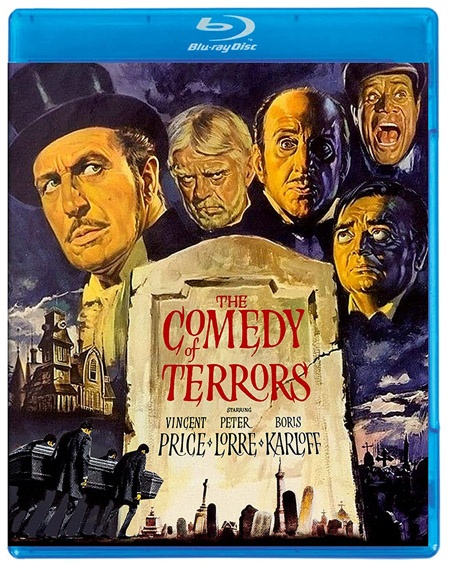

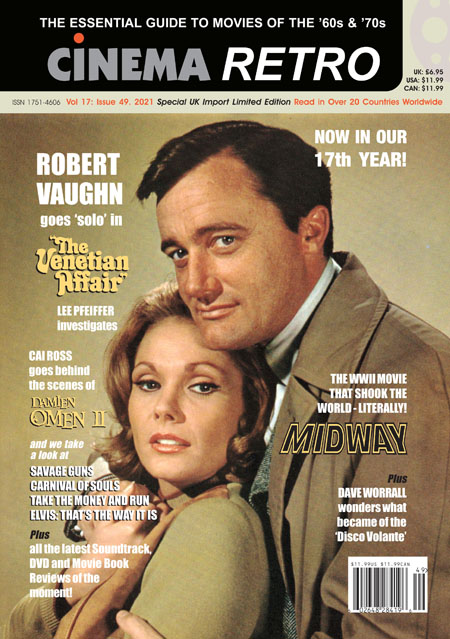
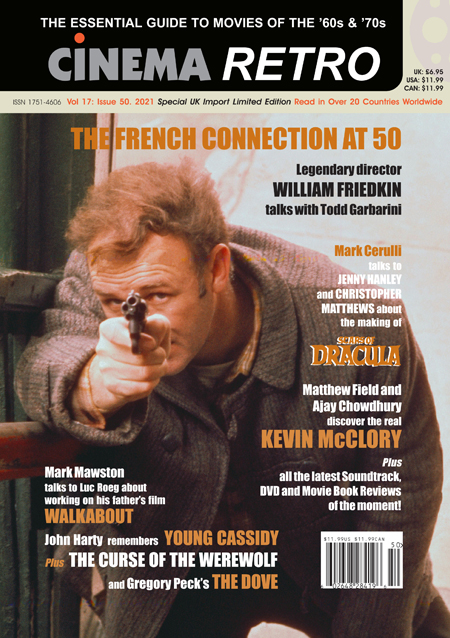
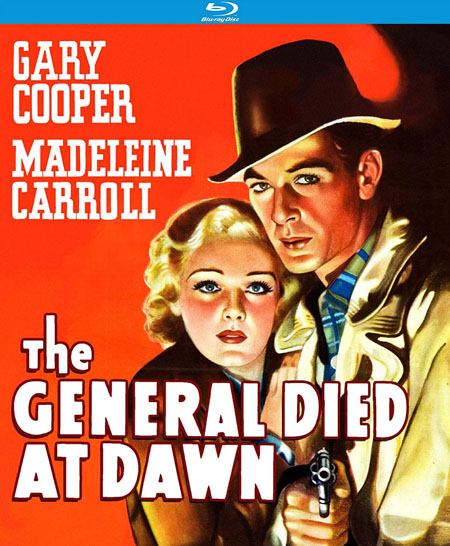
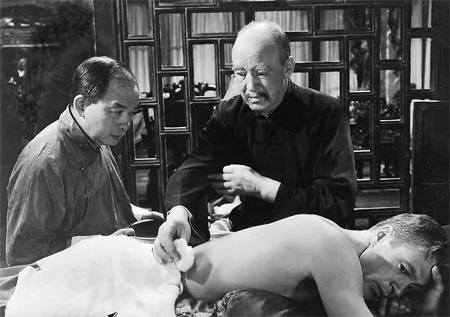
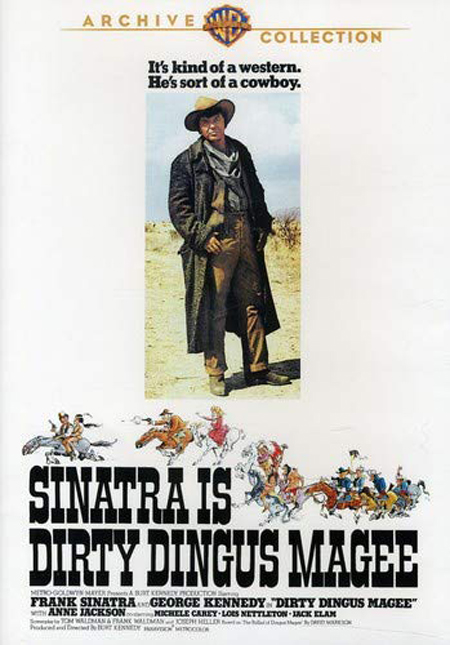





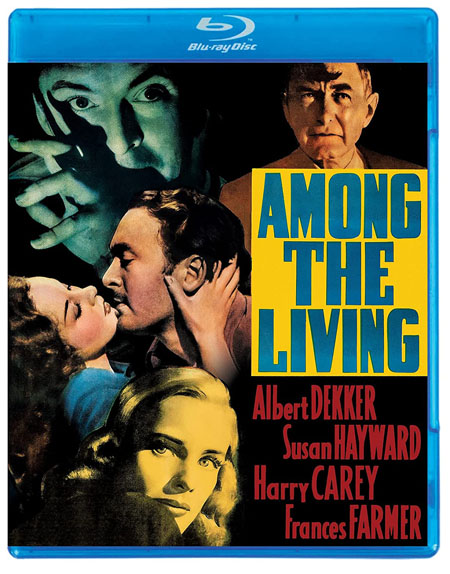





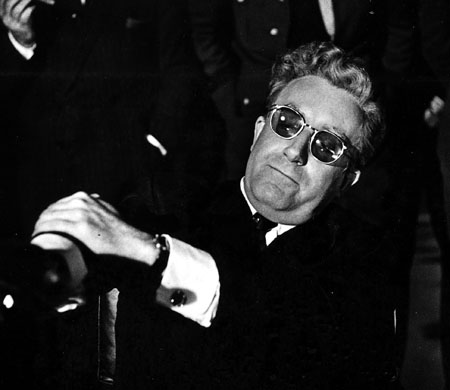
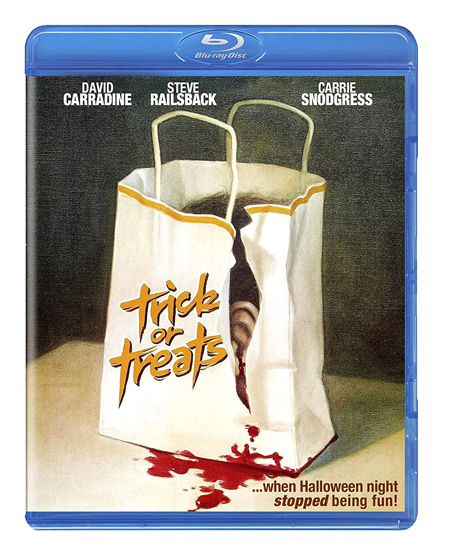
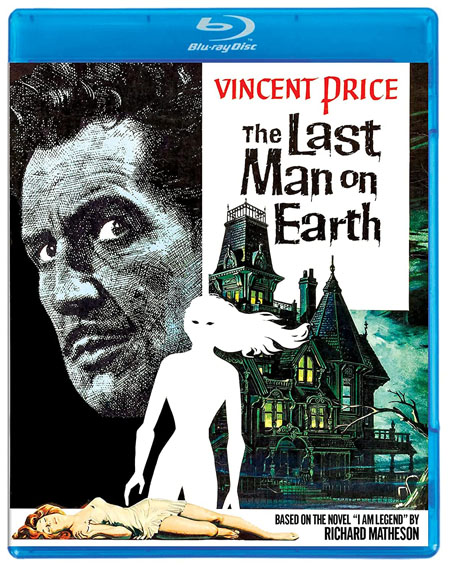
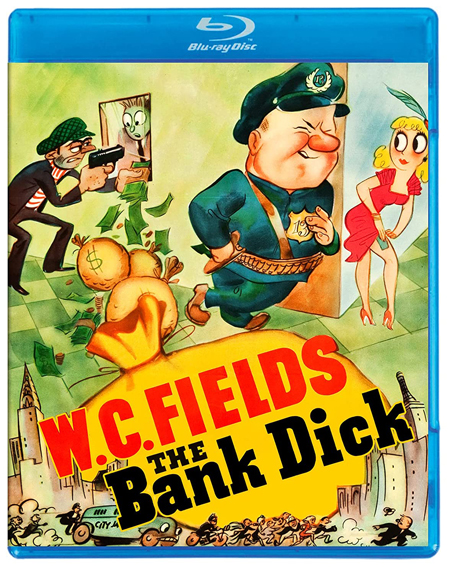
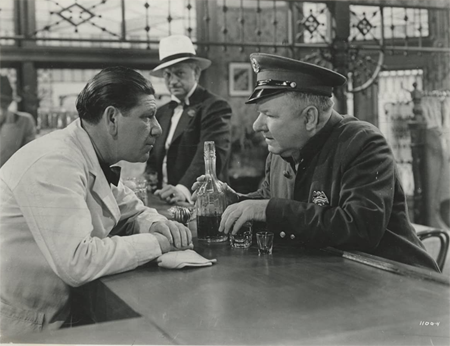


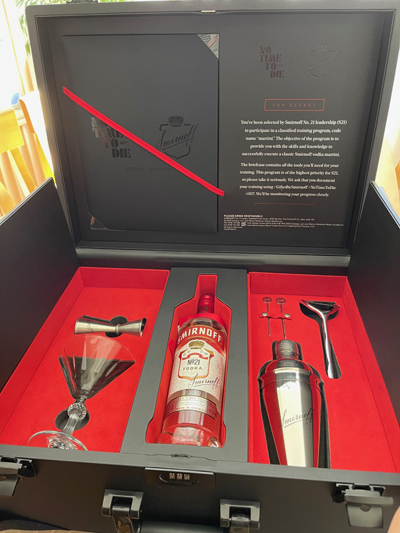



| All original site content copyright Cinema Retro 2007 | Cinema Retro |
Easy Money Trailer Rodney Dangerfield
Source: https://www.cinemaretro.com/index.php?%2Farchives%2F11222-STREAMING-REVIEW-EASY-MONEY-1983-STARRING-RODNEY-DANGERFIELD-AND-JOE-PESCI-AMAZON-PRIME.html
Posted by: babbpaits2000.blogspot.com
0 Response to "Easy Money Trailer Rodney Dangerfield"
Post a Comment